A side-by-side look at rechargeable front headlights and rear taillights from Magicshine and ROCKBROS, covering lumen output, smart brake sensing, battery runtime, and waterproofing so you can build the right front-and-rear setup for night riding.
This SEEMEE 400 pairs dual 400-lumen LEDs with a 360° halo ring, aiming to cover both a strong rear-facing beam and side visibility for riders on unlit roads or in mixed traffic. Its smart brake sensor is the standout feature: rather than staying at one brightness, it jumps to a full-power flash when it detects deceleration, which is meant to give drivers behind more warning than a static taillight gives. An aluminum housing and IPX6 waterproof rating point toward year-round commuting use rather than fair-weather-only riding, and the 1600mAh battery is rated for up to 107 hours of runtime between USB-C charges.
Who it is for
✓Commuters and road riders who want a taillight that reacts to braking, not just blinks
✓Riders in mixed-traffic conditions where 360° side visibility matters as much as rear visibility
✓Anyone building a synced Magicshine front/rear light system
✓Riders who charge infrequently and want a battery rated for 100+ hours of runtime
✓Year-round commuters who need an IPX6-rated housing for wet rides
Who should skip it
–Riders who only want a simple, always-on taillight without smart brake sensing
–Anyone on a tight budget — this is priced above several taillights in this comparison
–Buyers wanting a taillight confirmed to sync with non-Magicshine front lights
–Riders who need a front-facing headlight rather than a taillight
Fit, sync, and value
The 360° halo and brake-sensing flash are the two features that separate this from a basic taillight, and they're what you're paying the premium for. If you want the full front/rear sync experience, check that any front light and the optional remote are compatible before buying separately. Keep the USB-C cable handy and check the current Amazon return window in case the mount doesn't fit your seatpost or rack.
#2Magicshine Hori 1300S Bike Headlight, 1300 Lumens, Dual Mount for Garmin/Wahoo
Product overview
The Hori 1300S is built around a dual-beam design: a 1,300-lumen high beam for unlit trails and a separate cutoff low beam meant to light the road ahead on city streets without dazzling oncoming traffic or pedestrians. Its dual mount is the other headline feature, letting it share handlebar space with a Garmin, Wahoo, or GoPro-style mount instead of crowding the cockpit. A 3200mAh battery, USB-C charging, and an aluminum body with vibration-based auto-on/off round out a headlight aimed at riders who want one light for both trail and road use.
Who it is for
✓Riders who switch between lit streets and unlit trails and want one headlight for both
✓Cyclists running a Garmin, Wahoo, or action camera who need handlebar space for both
✓Anyone who wants hands-free auto-on/off instead of a manual power button
✓Riders planning to build a synced front/rear Magicshine setup via the optional remote
Who should skip it
–Riders on a tight budget — this is the most expensive light in this comparison
–Anyone who just wants a simple single-beam headlight without a cutoff mode
–Buyers who don't already use a compatible handlebar computer or camera mount
–Riders expecting the paired taillight included — the SEEMEE 150 MAG or SEEMEE 50 V2.0 is sold separately
Fit, sync, and value
Most of this light's value comes from the dual mount and cutoff beam working together — confirm your handlebar has room for both the light and your computer/camera mount before buying. The FTR LightSync remote is included, but the compatible taillight is sold separately, so factor that into the total cost if you want the full synced system. Check the current listing's return window before your first long ride.
The SEEMEE 50 V2.0 is a compact, budget-oriented taillight built around a 50-lumen optical strip rather than the higher-output halo design of Magicshine's SEEMEE 400. Its PelotonSync feature is aimed at group rides, syncing flash patterns with nearby lights, while FTR LightSync lets it pair with a compatible Magicshine headlight and remote for one-touch front/rear control. A 430mAh battery is rated for roughly 30.5 hours of runtime, and the compact body keeps weight down to about 28 grams.
Who it is for
✓Riders who want a lightweight, low-profile taillight rather than a high-output halo light
✓Group or club riders who want PelotonSync flash-pattern coordination
✓Budget-conscious buyers who still want IPX6 waterproofing and USB-C charging
✓Anyone adding a compatible rear light to an existing Magicshine Hori setup
✓Riders who prefer tool-free saddle rail or seatpost mounting
Who should skip it
–Riders who want maximum rear visibility from a single light — 50 lumens is modest next to this comparison's other taillights
–Anyone without a compatible Magicshine headlight who specifically wants FTR LightSync, since it needs a paired front light
–Long-distance riders who want 100+ hour runtime — 30.5 hours is on the lower end here
Fit, sync, and value
This light's value depends on how you plan to use its sync features — on its own it's a competent, compact taillight, but PelotonSync and FTR LightSync only add value if you're riding with a group or pairing it with a compatible Magicshine headlight. If you don't need syncing, weigh it against the brighter SEEMEE 400 above. Confirm your seatpost or saddle rail diameter matches the included mount and check the current return window.
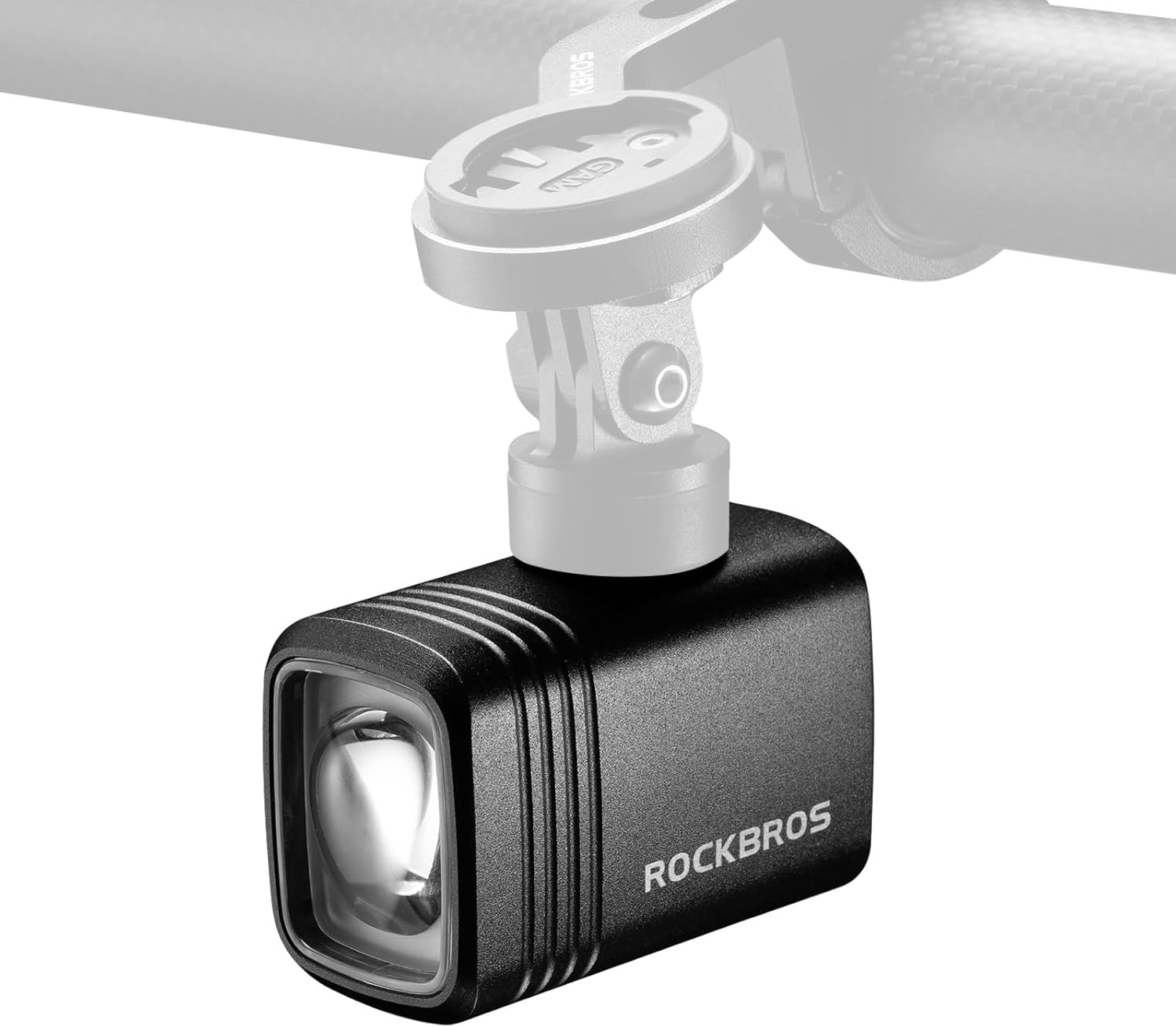
#4ROCKBROS 1000-Lumen Bike Headlight, USB-C Rechargeable Front Light
Product overview
This ROCKBROS headlight puts its 1000-lumen output behind a digital display that shows battery level and mode in real time, a feature most budget headlights skip. It also adds temperature and voltage management, automatically dimming if it detects overheating and protecting the battery at low voltage rather than cutting out unpredictably. At an IPX6 rating with reversible mounting, it's built as a general-purpose front light for street and light trail use rather than a high-output trail-specific unit like the Hori 1300S above.
Who it is for
✓Riders who want a battery/mode readout instead of guessing charge level from blink patterns
✓Commuters and general road riders who don't need the Hori's 1300-lumen trail-grade output
✓Anyone who values automatic overheat and low-voltage protection over manual mode switching
✓Riders who want IPX6 waterproofing at a lower price than the Magicshine headlight above
Who should skip it
–Trail riders who need maximum lumen output — 1000 lumens is a step below the 1300-lumen Hori
–Buyers who want an established track record — this listing has the fewest reviews in this comparison
–Anyone who specifically wants a dual mount for a computer or camera, which isn't part of this light's design
Fit and value
The digital display and smart temperature/voltage protection are this light's differentiators against similarly priced headlights. Given the small review count on this listing, it's worth reading current reviews for any pattern of early failures before committing. Check the current return window and confirm the reversible mount fits your handlebar diameter.
#5ROCKBROS Bike Tail Light, 5 Modes, USB Rechargeable, IPX5 Waterproof
Product overview
With 579 reviews at a 4.5-star average, this is the most established taillight in the group, built around a straightforward five-mode design — steady red, alternating red/blue, a breathing glow, dual strobe, and standard flash — rather than smart brake sensing. Its dual saddle-rail and seatpost brackets are tool-free and quick-release, which doubles as basic anti-theft since the light detaches in seconds when parked. An IPX5 rating and COB LED lens round out a light built for daily commuting rather than sustained wet-weather exposure.
Who it is for
✓Riders who want a proven, widely-reviewed taillight rather than a newer smart-sensor light
✓Commuters who want quick-release theft prevention when locking up outside
✓Budget-focused buyers — this is the least expensive light in this comparison
✓Riders who want mode variety, including a colorful breathing glow, for visibility and style
Who should skip it
–Riders who specifically want brake-sensing smart taillights — this is manual-mode only
–Anyone riding in consistently heavy rain — IPX5 is a lower water-resistance rating than the IPX6 lights in this comparison
–Riders who want a digital battery percentage readout — this uses a simpler 4-dot LED indicator
Fit and value
At the lowest price in this comparison with the highest review count, this light's value is in its track record rather than smart features. The quick-release mount is convenient but means the light isn't permanently secured — factor that into anti-theft planning if you can't take it with you. Confirm your seatpost or saddle rail size matches the included brackets and check the current listing's return window.
Bike lights split into two jobs that don't overlap: a front headlight lets you see the road, while a rear taillight lets drivers and other riders see you. Most of the lumen numbers, mounting styles, and smart features on the market only make sense once you know which job a given light is doing — a 1300-lumen headlight and a 50-lumen taillight aren't competing products, they're solving different problems.
Front Headlights vs. Rear Taillights
If you ride at night or in low light at all, plan on both a front and a rear light rather than picking one. A headlight needs enough lumens to actually illuminate the road or trail ahead — typically several hundred to over a thousand lumens for real night riding — while a taillight's job is pure visibility, where even 30-50 lumens is highly noticeable from behind in the dark. Buying a bright headlight and skipping the taillight (or vice versa) leaves a real gap: you can see, but drivers behind you can't see you, or you're visible from behind but riding blind.
Lumens: How Bright Is Bright Enough
Lit streets and commuting: a few hundred lumens up front is usually enough to be seen and to see potholes or debris
Unlit roads or light trail use: look toward 1000+ lumens with a wide or dual (high/low) beam pattern
Taillights: 30-100 lumens is typical; higher-output halo-style taillights add side visibility, not just rear brightness
A dual-beam or cutoff-lens headlight avoids blinding oncoming traffic, which matters more than raw lumens on shared roads
Smart Features: Brake Sensors and Light Sync
Several taillights in this comparison include a brake sensor that jumps to a bright flash when it detects sudden deceleration, giving drivers behind more warning than a static or slow-blinking light. Some also sync front and rear lights together through a proprietary remote or app, letting you control both with one action. These features add real value for commuters riding in traffic, but they generally only work within the same brand's ecosystem — a Magicshine remote won't control a ROCKBROS light and vice versa, so check compatibility before assuming you can mix and match.
Battery Life and USB-C Charging
Nearly every light in this category has moved to rechargeable batteries with USB-C charging rather than disposable batteries. Runtime varies enormously by mode — a light rated for 100+ hours on its lowest steady setting might last a fraction of that on its brightest flash pattern, so treat manufacturer runtime figures as best-case numbers for the most efficient mode, not an average across all settings.
Mounting and Waterproofing
Headlights typically clamp to the handlebar, while taillights mount to the seatpost or saddle rails — check that a light's mount matches where you actually want to put it, especially if your handlebar is already crowded with a computer or phone mount. On water resistance, IPX6 generally holds up to heavy rain and splashing, while IPX5 is rated for lighter exposure; neither is designed for submersion, so avoid pressure-washing a bike light or leaving it in standing water.
Legal Requirements for Bike Lights
Many states and countries legally require a front light and/or rear reflector or light after dark, but the specifics — required color, minimum visibility distance, whether a light satisfies a reflector requirement — vary by jurisdiction. Check your local traffic code rather than assuming a light purchase alone brings you into compliance.
FAQ
For night riding, plan on both. A front headlight helps you see the road; a rear taillight helps drivers and other riders see you. They solve different problems, so one doesn't substitute for the other.
Bike lights are built for handlebar or seatpost mounting, vibration resistance, and (for headlights) beam patterns designed not to blind oncoming traffic. A general flashlight or headlamp can work in a pinch, but usually lacks a secure bike mount and the cutoff beam design that keeps you from dazzling others.
For genuinely unlit roads or trails, look toward 1000+ lumens up front. For lit streets and commuting, a few hundred lumens is usually plenty. Taillights don't need nearly as many lumens — 30-100 lumens is typical and highly visible after dark.
In many places, yes, after dark — but exact requirements (color, brightness, whether a reflector counts) vary by state and country. Check your local traffic code rather than assuming any light purchase satisfies the law.
Most are rated IPX5 or IPX6 per their listings, which covers rain and splashing but not submersion. Check each product's specific water-resistance rating in the comparison table above rather than assuming all bike lights handle water the same way.
It depends heavily on the mode you use — manufacturer runtime ratings (see the comparison table) are typically for the lowest steady setting, not the brightest flash pattern. Expect meaningfully shorter runtime on higher-brightness or fast-strobe modes.
It detects sudden deceleration and switches to a brighter, faster flash automatically, similar to how a car's brake lights work, to give drivers behind more warning than a static or slow-blinking taillight provides.
Wipe the lens with a soft, damp cloth and mild soap, avoiding abrasive cleaners that can scratch the lens or solvents that can damage the housing seals. Keep water away from the charging port and let the light dry fully before charging.
Yes — many riders run a flashing taillight and sometimes a headlight during daytime specifically to increase visibility to drivers, independent of any legal after-dark requirement.
Get weekly top picks
Data-ranked products delivered to your inbox every week. Skip the research, get the winners.
No spam ever. Unsubscribe anytime. We respect your inbox.