Best Convection Ovens
Discover top-rated convection ovens for baking, roasting, air frying, and more. Our picks offer versatile cooking modes, consistent heat, and convenient countertop designs.
We may earn a commission from links on this page.


Top Picks Compared
1. Nuwave Bravo XL Air Fryer Oven NUWAVE | 2. Nuwave Bravo Pro Smart Toaster Oven Air Fryer NUWAVE | 3. Toshiba Air Fryer Combo Microwave Oven TOSHIBA | 4. Our Place Large Wonder Oven OUR | 5. Nuwave Bravo Pro Air Fryer Oven Combo NUWAVE | |
|---|---|---|---|---|---|
| Our Score | 9.9 | 9.7 | 9.6 | 9.4 | 9.3 |
| Deal | — | -10% | -11% | — | -10% |
| Cooking Functions | 12-in-1 | 12-in-1 | 8-in-1 | 6-in-1 | 10-in-1 |
| Capacity | 30 qt | Countertop | Countertop | 32 qt | 21 qt |
| Type | Air fryer oven | Toaster oven air fryer | Microwave combo | Countertop oven | Air fryer oven combo |
| Air Fry | Yes | Yes | Yes | Yes | Yes |
| Controls | Digital | Smart | Digital + child lock | Dial | Digital |
| Best For | Family meals | Smart controls (50–450°F) | Microwave + air fry | Large meals + accessories | Family-sized crisping |

Convection Oven Buying Guide
A countertop convection oven circulates heated air around food, helping it cook more evenly and often more quickly than in a conventional oven. The best model for your kitchen should fit the available counter space, hold the cookware and portions you use most often, and provide controls that make its extra cooking modes genuinely useful. Start by deciding whether you need a dedicated toaster oven, an air fryer oven, or a combination microwave that adds convection cooking to a single appliance.
Capacity and Counter Space
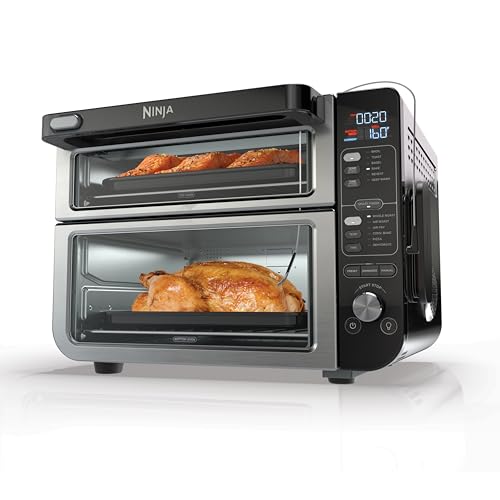
Capacity descriptions such as quarts do not always reveal what fits inside. Check the manufacturer's usable interior dimensions and examples such as pizza diameter, toast slices, chicken size, or baking-pan dimensions. Measure the counter from front to back and include clearance for the door, handles, ventilation, and nearby cabinets. A large French-door oven can simplify access but needs room in front, while a compact microwave convection combo may save space by replacing more than one appliance.
Cooking Modes That Match Your Meals
Bake, convection bake, roast, broil, toast, reheat, and air fry are the most useful everyday modes. More presets are not automatically better; what matters is whether temperature, time, fan speed, and rack position suit the food you prepare. Air frying benefits from strong circulation and a mesh basket, while baking benefits from stable temperature control and enough interior height to keep food away from the upper elements. Microwave combinations add speed but may require more attention to compatible cookware and operating sequences.
Temperature Control and Even Cooking
A broad temperature range supports low-temperature warming or proofing as well as high-heat roasting and crisping. Precise controls are valuable, but oven design and heat distribution determine real results. Preheating, rotating a pan when needed, and using the recommended rack position can improve consistency. Some models let you adjust top and bottom heating independently or use a temperature probe, which can be useful for meat and larger roasts.
Controls, Doors, and Accessories
Controls should remain readable when the kitchen is busy. Dedicated knobs are quick for common adjustments, while digital panels can provide more exact settings and useful countdown information. Look for a door that opens smoothly, a handle that stays comfortable, and racks that slide without tipping. Included trays, air-fry baskets, racks, and crumb trays add value only when they are well sized, easy to clean, and readily replaceable.
Cleaning and Long-Term Use
Convection airflow can spread grease and crumbs around the cooking chamber, so removable crumb trays and accessible interiors matter. Wipe splatter after the oven cools, wash accessories according to the manual, and avoid abrasive cleaners on coated surfaces or heating elements. Exterior heat is also important in a small kitchen: maintain the stated clearances and do not store items on top unless the manufacturer explicitly permits it.
Energy Use and Cooking Speed
A countertop convection oven can be efficient for smaller meals because it heats less space than a full-size range. Actual savings depend on wattage, preheat time, cooking duration, and how much food is prepared at once. Faster is not always better for delicate baking, so follow recipe guidance and reduce temperature or time cautiously when converting from conventional-oven instructions.
FAQ
A convection fan moves hot air around food, which can improve browning and reduce hot spots. It often shortens cooking time for roasted foods and helps multiple pieces cook more consistently, although delicate recipes may still work better with the fan turned off.
Both use moving hot air, but an air fryer usually has a smaller chamber and more concentrated airflow. Many countertop convection ovens include an air-fry mode and perforated basket, giving them similar capability with more interior space. Crispness depends on airflow, food spacing, temperature, and the amount of oil used.
A common starting point is to reduce a conventional recipe by about 25°F or begin checking the food earlier. The correct adjustment depends on the oven and recipe, so follow the appliance manual and use visual or internal-temperature cues rather than relying only on the timer.
Metal may be permitted in convection-only modes on some combination ovens but is generally unsafe in microwave mode. Rules vary significantly by model. Use only cookware approved in the manufacturer's instructions and confirm the selected cooking mode before starting.
Clearance requirements vary by appliance because heat and vents are positioned differently. Follow the manual's minimum space above, behind, and beside the oven. Keep vents unobstructed and place the unit on a stable, heat-resistant surface away from curtains and other combustible materials.
Get weekly top picks
Data-ranked products delivered to your inbox every week. Skip the research, get the winners.
No spam ever. Unsubscribe anytime. We respect your inbox.