We compared eight camera drones across camera specs, flight time, transmission range, obstacle avoidance, and smart flight modes — from sub-249g travel drones to hands-free self-flying cameras. Every spec below comes from the manufacturers' listings; regulatory claims are the listings' statements, and where a listing doesn't disclose something, we say so instead of guessing.
AI Auto Track, Spotlight, Dual Tracking, vertical shooting, AI Night Mode
Auto Track, SmartGo one-tap moves, 2.7K vertical
GPS RTH, one-tap takeoff/landing, QuickShots
GPS RTH, Follow Me, Waypoint, Point of Interest, beginner mode
GPS auto return, Follow Me, Waypoint, Circle Fly, screen remote
Best For
Travel and adventure footage with full safety features
Compact travel filming and vlogging
Beginners who want DJI reliability
Budget GPS flying with the largest review base here
Budget buyers who want batteries and a screen remote
Top 5 In-Depth Reviews
Detailed analysis of each leading product, including audience fit, limitations, value and purchase information.
#1SKYROVER X1 Drone with Camera Combo, 4K/60fps, 8K Photo, 360° Obstacle Avoidance
Product overview
The SKYROVER X1 is the most feature-complete drone on this list, and its spec sheet reads like a checklist of everything that used to cost twice as much: 4K/60fps HDR video with 48MP photos from a 1/1.32-inch CMOS sensor — the largest sensor here — paired with an f/1.7 aperture that genuinely helps at dusk, plus an AI Night Mode for evening shots. The 360° obstacle avoidance is the headline safety feature: full spherical sensing plus Smart Return to Home, which is the difference between confidently flying around trees and hovering nervously in open fields. The transmission spec is the second standout — a claimed 9.32 miles with 1080p/60fps live view — though real-world range always depends on terrain and interference. The under-249g weight keeps it travel-friendly, and the three-battery combo stretches total flight time to a claimed 96 minutes. The creative toolset (AI Auto Track, Spotlight, Dual Tracking, vertical shooting) is aimed squarely at social media output. The honest caveat: SKYROVER is newer to this market than the DJI name next on this list, and the page shows no discount at the time of writing.
Who it is for
✓Travelers who want prosumer footage in a sub-249g body
✓Buyers who want full 360° obstacle avoidance
✓Evening and dusk shooting — large sensor plus AI Night Mode
✓Social creators who want vertical shooting and tracking modes
✓Anyone who wants a three-battery combo for long sessions
Who should skip it
–Buyers who want the DJI ecosystem and its app maturity
–Deal hunters — no discount shown at the time of writing
–Beginners on a strict budget — the Holy Stone models cost far less
–Users who only need short selfie-style flights
Warranty and value
The X1's value is spec density: 360° avoidance, a large sensor, and a three-battery combo in one package. The premium over the budget tier buys safety and image quality, which are exactly the two things beginners underestimate.
#2Skyrover S1 Mini Drone with Camera, 4K/60fps Video, 8K/48MP Photos
Product overview
The S1 is the X1's compact sibling, trading the big sensor and 360° sensing for a smaller body and a lower price while keeping the core video experience — 4K/60fps with 8K/48MP photo claims, a true 3-axis mechanical gimbal, and forward obstacle avoidance. The 8K photo spec comes with an honest footnote from the listing itself: update the firmware to unlock full resolution, which is exactly the kind of disclosure that makes the spec sheet trustworthy. The 40-minute single-battery flight time is the longest per-battery claim on this list, and the 7.45-mile transmission keeps the live view responsive. The creative features are social-first — Auto Track follow mode, one-tap SmartGo cinematic moves, and 2.7K vertical cropping for Reels and Shorts — so this is a vlogger's drone rather than a landscape explorer's. The forward-only avoidance means the pilot still does the looking around, which is fine for open spaces and something to respect in trees. For most buyers, this is the sensible middle: most of the X1's experience at a friendlier price.
Who it is for
✓Vloggers and social creators who want vertical-ready footage
✓Travelers who want a compact 4K/60 drone
✓Anyone who values the longest per-battery flight claim here
✓Buyers who want a 3-axis mechanical gimbal at a mid price
✓Solo creators using Auto Track to film themselves
Who should skip it
–Flyers who want full 360° obstacle sensing
–Buyers who want the largest possible camera sensor
–Deal hunters — no discount shown at the time of writing
–Anyone who wants a stated weight figure — the page doesn't publish one
Warranty and value
The S1 delivers the core X1 experience — 4K/60, gimbal stability, social-ready modes — in a smaller package. For creators who film themselves more than landscapes, it is the better value of the two SKYROVERs.
#3DJI Mini 4K Fly More Combo, Drone with 4K UHD Camera, Under 249g
Product overview
The DJI Mini 4K is the brand-name anchor of this list: the entry point to DJI's ecosystem, and for many beginners the default first drone. The core specs are honest rather than spectacular — 4K UHD on a 3-axis gimbal, 10km transmission, Level 5 wind resistance at 38kph, and takeoffs up to 4,000 meters — and the Fly More Combo's three batteries stretch total flight to a claimed 93 minutes. What the spec sheet doesn't show is the ecosystem: mature flight software, in-app learning resources, and the GPS return-to-home behavior that makes first flights forgiving. The under-249g weight means no FAA registration for recreational use per the listing, which the listing itself directs buyers to verify on the FAA website. One operational note straight from the listing: the DJI Fly app has been removed from Google Play, so the app comes from DJI's own site — a real friction point for Android users worth knowing before checkout. The tradeoff against the SKYROVERs above is feature depth: no obstacle avoidance is mentioned here, and the creative modes are fewer. Buy it for reliability and resale value, not spec-per-dollar.
Who it is for
✓First-time drone buyers who want the established brand
✓Anyone who values app maturity and learning resources
✓Flyers who want GPS return-to-home behavior they can trust
✓Buyers who plan to resell or upgrade within the DJI ecosystem
✓Travelers who want a proven sub-249g machine
Who should skip it
–Buyers who want obstacle avoidance — none is listed
–Spec-maximizers — the SKYROVER X1 offers more features per dollar
–Android users who find the app-download workaround annoying
–Anyone wanting 4K/60fps — this is standard 4K
Warranty and value
The Mini 4K's value is DJI reliability: mature software, forgiving flight behavior, and strong resale. It costs more per spec than the challengers here, and for beginners the peace of mind is usually worth it.
#4Holy Stone HS360S GPS Drone with 4K UHD Camera, 249g Foldable
Product overview
The Holy Stone HS360S is the budget GPS drone with the largest buyer base on this list, and its formula is why: it delivers the safety-critical GPS features — precise positioning, auto return-to-home on low battery or signal loss — at a fraction of DJI money. The 4K camera uses a GalaxyCore sensor with an 85° wide-angle lens that tilts 90° from the remote or app, which is flexible enough for most hobby footage. The connectivity design is worth understanding: the remote links to your phone over a data cable for real-time image streaming rather than WiFi, which the listing frames as a stability win. The smart modes cover the fun basics — Follow Me, Waypoint, Point of Interest, plus the one-tap Spiral Up and Catapult moves — and the beginner mode with optical flow makes first flights survivable. The honest limits: no obstacle avoidance, 20 minutes per battery, and a camera that trails the 1/1.32-inch sensor class by a real margin. For first-time pilots who want GPS safety without the flagship price, this is the strongest budget pick.
Who it is for
✓First-time pilots who want GPS return-to-home on a budget
✓Buyers who want the largest review base in the budget tier
✓Flyers who prefer cable-based phone streaming over WiFi
✓Anyone practicing before upgrading to a flagship drone
✓Casual hobbyists who fly in open areas
Who should skip it
–Buyers who want obstacle avoidance
–Anyone wanting 4K/60fps or a large sensor
–Long-session flyers — 20 minutes per battery
–Users who want a mechanical gimbal
Warranty and value
The HS360S's value is GPS safety at the entry price, backed by the largest review base in its tier and a current discount. The camera and flight-time tradeoffs are the honest cost of that price.
#5Utceku Drones with Camera 4K, 3 Batteries, Screen Remote
Product overview
The Utceku is the value-pack play: three batteries for a claimed 75-plus minutes of total flight, a built-in 12.8cm screen on the remote so no phone is needed for the live view, and a GPS package with auto return, Follow Me, Waypoint, and Circle Fly — all at the budget end of this list. The spec sheet needs a careful read: the '8K HD camera' claim comes with no sensor size disclosed, and the '360° obstacle avoidance' claim sits in the headline without detail, which at this price point warrants skepticism until demonstrated. The operational instructions are unusually honest for the category — acquire nine-plus satellites before takeoff so the home point records correctly, practice low-altitude flights in open areas for three days — and that candor counts for something. The critical caveat is the review base: this listing is brand new, with almost no buyer feedback, so the five-star display means very little yet. Treat it as a budget experiment with a good feature list and unproven execution.
Who it is for
✓Budget buyers who want three batteries included
✓Anyone who wants a screen remote without a phone
✓Beginners who appreciate explicit practice instructions
✓Flyers who want GPS return-to-home at the lowest price
✓Gift buyers — the listing includes a color gift box
Who should skip it
–Buyers who want an established review base — this listing is nearly new
–Anyone who wants verified camera quality — no sensor spec is given
–Users who want a mechanical gimbal
–Flyers in complex environments — the 360° avoidance claim is unproven
Warranty and value
The Utceku's value is hardware-per-dollar: three batteries, a screen remote, and GPS at the budget price. The risk is the almost-empty review base — the feature list is long, and the track record is not.
The eight drones in this guide span two distinct categories that share a skill floor: camera drones you fly with a controller, and self-flying drones that film you hands-free. The differences that matter are camera quality, flight time, obstacle avoidance, and whether the drone can come home on its own. Every spec below comes from the manufacturers' listings; regulatory claims are the listings' statements, and where a listing doesn't disclose something, we say so instead of guessing.
Camera Specs: 4K, 8K, and What the Sensor Size Tells You
Resolution numbers sell drones, but sensor size decides the footage. The SKYROVER X1's 1/1.32-inch sensor is the largest on this list — bigger photosites capture more light, which is what makes dusk footage usable rather than grainy — while the S1's 1/2-inch sensor and the Holy Stone models' smaller sensors trade low-light ability for price. The '8K photo' claims deserve a skeptical read: photo resolution above the video spec usually means pixel-shifting or interpolation, and the S1's own listing admits the full resolution needs a firmware update. For most buyers, 4K video with a gimbal matters more than the photo megapixel number.
Flight Time and Batteries: What 11 to 96 Minutes Really Means
Flight time claims split into two numbers: per-battery and total. The S1 claims 40 minutes per battery — the longest single-battery claim here — while the HOVERAir models quote 11 minutes per battery because their flights are short, autonomous takes rather than long cruises. The combos multiply: three batteries turn the X1 into 96 claimed minutes, the DJI Mini 4K into 93. The practical rule: divide every claim by real-world conditions. Wind, cold, and aggressive flying all cut into flight time, so plan sessions around roughly three-quarters of the advertised number.
Drones Under 249g: The FAA Registration Line Explained
The 249-gram threshold appears across most of these listings because it sits at a regulatory boundary: the DJI and Holy Stone listings state that sub-249g drones need no FAA registration or Remote ID for recreational use in the US. Those are the listings' statements, and the DJI listing itself directs buyers to the FAA's official website for current requirements — which is the right instinct, because rules change and vary by country. The practical takeaway: if registration friction matters to you, the sub-249g models are the ones to shortlist, and the FAA's current page is the authority to confirm against.
Obstacle Avoidance: 360° vs Forward vs None
Obstacle avoidance is the most valuable safety feature a drone can have, and the range on this list is wide: the X1 senses in all 360 degrees, the S1 senses forward only, and the budget Holy Stone and Utceku models rely on the pilot's eyes plus GPS return-to-home. The HOVERAir pair takes a different approach — enclosed propeller guards instead of electronic sensing, which is safer for the drone and its surroundings during close-range selfie flights. The honest buying rule: 360° sensing is worth paying for if you fly near trees, buildings, or people; forward-only covers open-space flying; and if your budget lands you in the no-sensing tier, fly high and open.
Follow-Me and Self-Flying Drones: When to Skip the Controller
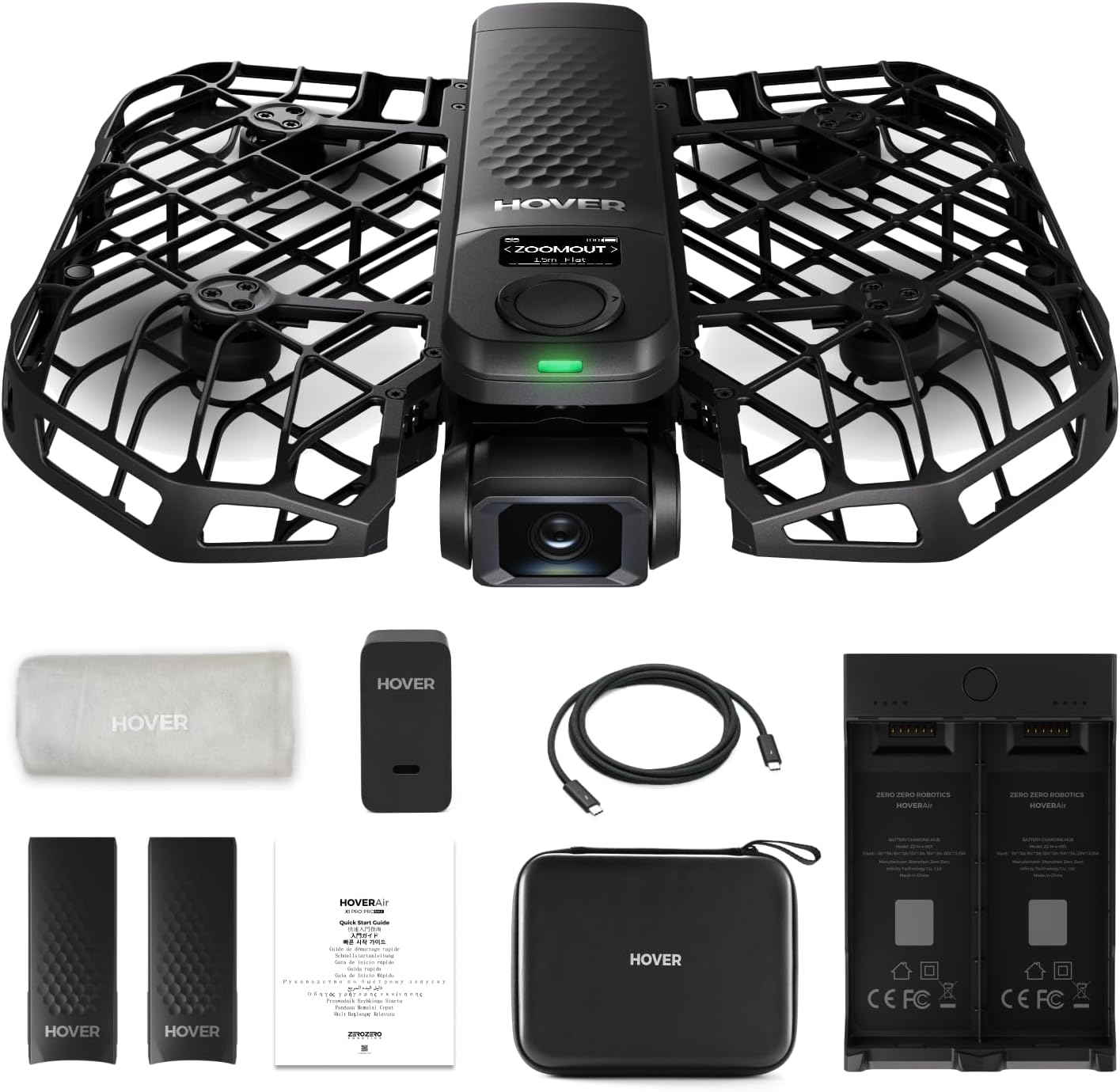
The HOVERAir drones represent a different product philosophy: instead of a pilot, the drone follows you on pre-programmed paths — Hover, Follow, Zoom Out, Orbit — launching from your palm with a click or voice command, no controller or phone needed. The X1 tracks at up to 15 mph for cycling and skating; the X1 PRO pushes follow speed to 42 km/h for skiing and fast action. The tradeoff is resolution and range: the HOVERAir X1 tops out at 2.7K and short flight paths, because it is a camera that happens to fly, not a long-range explorer. For solo creators, that trade is perfect; for landscape pilots, it is the wrong tool.
GPS Return to Home: The Feature That Saves Drones
Return to Home is the insurance policy every GPS drone should have: when the battery runs low or the signal drops, the drone flies itself back to its recorded takeoff point. Every GPS model here lists it, and the Utceku listing adds the honest operational detail — wait for nine or more satellites before takeoff so the home point is recorded correctly. The feature's limits are worth knowing too: RTH needs the home point locked before flight and a clear return path; it will not dodge new obstacles unless the drone also has avoidance sensing. Treat RTH as the safety net, not the plan.
Frequently Asked Questions
The SKYROVER X1 leads this guide for feature completeness: 4K/60fps with the largest sensor here, 360° obstacle avoidance, and a three-battery combo. The DJI Mini 4K is the pick for beginners who want brand maturity, and the HOVERAir X1 PRO is the choice when you want the drone to film you with no controller at all.
The DJI and Holy Stone listings state that sub-249g drones need no FAA registration or Remote ID for recreational use in the US — those are the listings' claims, and the DJI listing itself points buyers to the FAA's official website for current requirements. Rules vary by country and change over time, so check the FAA's current page before relying on a listing.
It uses sensors to detect obstacles and either stop or reroute the drone before a collision. The X1 senses in all directions (360°), the S1 senses forward only, and the budget models rely on the pilot. The HOVERAir drones use enclosed propeller guards instead of electronic sensing, which suits close-range hands-free flying.
A follow-me drone tracks a moving subject — usually you — keeping it centered in frame while flying autonomously. The HOVERAir models take it furthest with self-flying paths and palm launches that need no controller at all; the SKYROVER and Holy Stone models offer follow modes alongside normal piloting. Follow speed matters: the HOVERAir X1 tracks up to 15 mph, the X1 PRO up to 42 km/h.
Per-battery claims here range from about 11 minutes (HOVERAir) to 40 minutes (Skyrover S1), with combos multiplying: three batteries give the X1 a claimed 96 minutes total. Real-world flight time runs shorter in wind, cold, or aggressive flying — plan around three-quarters of the claim.
4K refers to video resolution; the '8K' labels on the Skyrover models refer to photo resolution, and photo specs above the video spec often involve interpolation or firmware unlocks — the S1's listing says so itself. For most people, 4K video from a larger sensor and a gimbal produces better footage than a bigger photo number from a smaller sensor.
It depends on the drone. The DJI Mini 4K claims takeoffs up to 4,000 meters, while the HOVERAir X1's listing warns performance may degrade above 2,000 meters. Thin air reduces lift and stability for all drones; check each listing's altitude guidance and follow local airspace rules.
Not always. The Utceku's remote has a built-in 12.8cm screen with no phone required; the HOVERAir drones fly from the device itself with the app only needed for previews and downloads; and the DJI Mini 4K needs the DJI Fly app — which the listing notes has been removed from Google Play, directing users to download it from DJI's website.
Get weekly top picks
Data-ranked products delivered to your inbox every week. Skip the research, get the winners.
No spam ever. Unsubscribe anytime. We respect your inbox.