Best Level 2 EV Chargers 2026
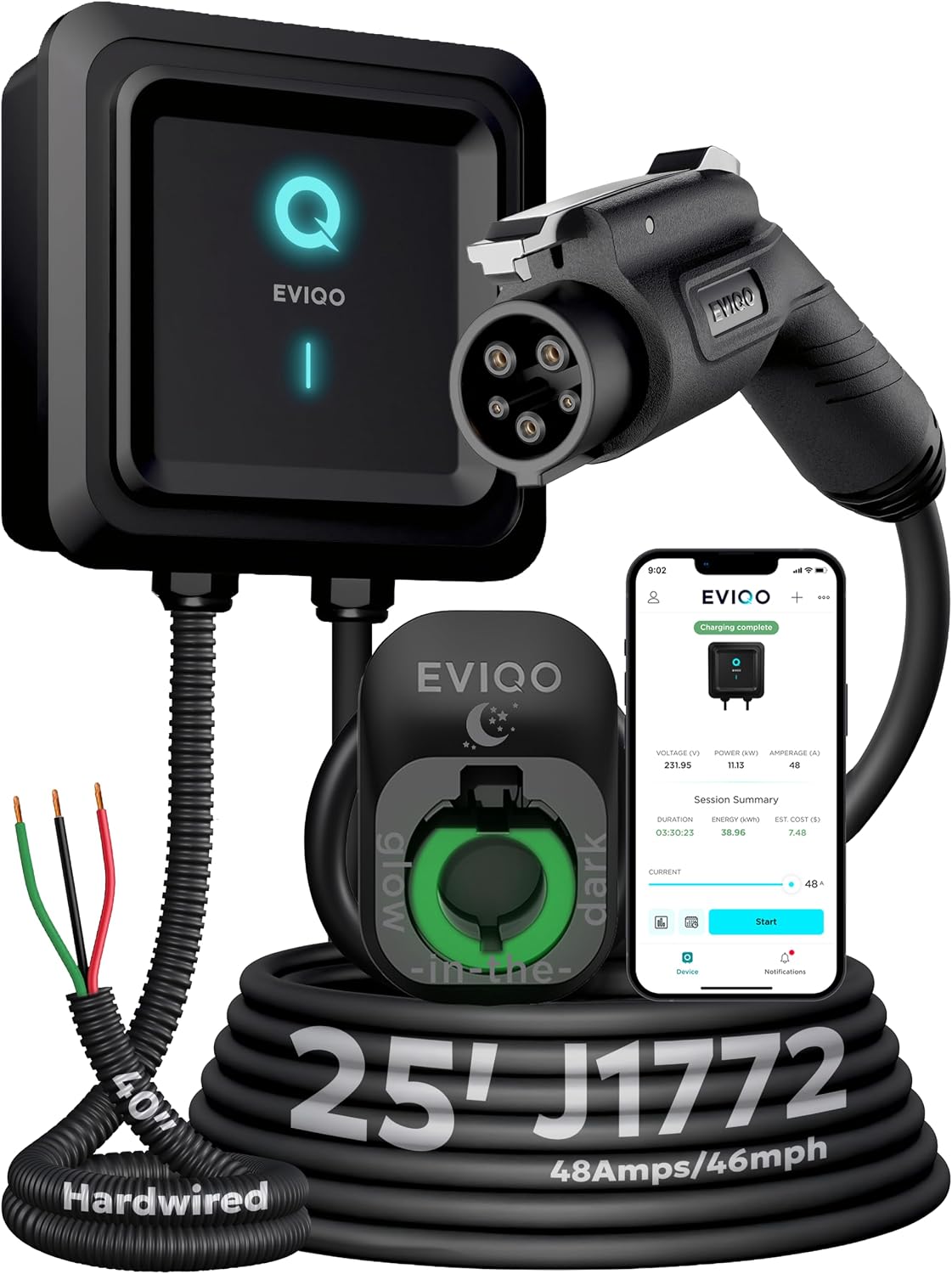
Our pick for the best Level 2 EV charger in 2026. We review the EVIQO 48A hardwired J1772 home charging station on charging speed, amperage, connector compatibility, WiFi smart app control, weatherproofing, safety certifications, and installation so you can charge your electric vehicle faster at home.
We may earn a commission from links on this page.

Level 2 EV Charger Buying Guide: How to Choose in 2026
A Level 2 EV charger is the fastest practical way to charge an electric vehicle at home, running on the same 240V circuit as an electric dryer or oven. Compared with a standard 120V Level 1 cord, a Level 2 home charging station can add many times more range per hour, so most drivers wake up to a full battery. The EVIQO 48A hardwired charger above is our top pick, and this guide explains the amperage, connector, installation, smart features, and safety certifications to weigh before you buy an EV charger for your home.
Amperage and Charging Speed: How Fast Will It Charge?
Charging speed on a Level 2 EV charger is driven by amperage. Home chargers commonly range from 16A up to 48A or 50A. A 48A charger like the EVIQO delivers up to 11.5 kW and can add roughly 50 miles of range per hour, enough to fully recharge most electric vehicles overnight. Higher amperage needs a larger dedicated circuit: a 48A charger requires a 60A/240V breaker. Also confirm your EV's onboard charger can accept the full rate, since the vehicle, not the charging station, sets the ceiling on how fast it actually charges.
Connector Type: J1772 vs NACS (Tesla)
Most non-Tesla EVs in North America use the SAE J1772 connector, while Tesla vehicles use NACS. A J1772 EV charger works with every North American EV and plug-in hybrid, and it also charges a Tesla when paired with an inexpensive J1772-to-NACS adapter (usually sold separately). Choosing a J1772 home charger keeps you compatible with the widest range of current and future electric vehicles, which matters if your household owns more than one EV or plans to switch brands later.
Hardwired vs Plug-In Installation
Level 2 EV chargers install two ways: hardwired directly to the circuit, or plugged into a NEMA 14-50 outlet. A hardwired charging station supports higher continuous amperage such as 48A, resists loosening or heat at a plug, and is often preferred for permanent outdoor installations. Either way, a Level 2 charger must be installed by a licensed electrician per the National Electrical Code, which typically means a dedicated breaker and proper wire gauge. Budget for professional installation when comparing the true cost of an EV charger.
Smart WiFi App Features and Scheduled Charging
A smart EV charger connects over WiFi so you can start and stop charging, adjust the current, and monitor energy use and cost from a phone app. The most useful feature is scheduled charging: setting sessions for off-peak overnight hours can meaningfully cut electricity costs where utilities charge time-of-use rates. Because chargers often sit in a garage or basement, a strong 2.4GHz WiFi antenna helps the connection stay reliable. Over-the-air software updates also keep a smart charging station current without new hardware.
Safety Certifications and Weatherproofing
Safety certification is non-negotiable for a device delivering 240V outdoors. Look for a Level 2 EV charger that is UL and ETL listed, FCC compliant, and ideally Energy Star certified. For outdoor mounting, an IP66 or NEMA 4 weatherproof enclosure protects the charger against rain, snow, heat, and dust. Built-in protections against overcurrent, overvoltage, ground faults, and overheating add another layer of safety for daily home charging.
Cable Length, Mounting, and Everyday Use
- A longer cable such as 25 feet gives flexibility in where you park and where the charging station is mounted, reaching either side of a vehicle.
- A sturdy connector holster keeps the J1772 plug protected and easy to grab; some include high-visibility or glow-in-the-dark holsters for low-light garages.
- An accessible reset button lets you restart the charger without opening the enclosure or cutting power.
- Check the weight and mounting hardware if you plan to install the EV charger on drywall, masonry, or a pedestal.
How We Evaluated This EV Charger
We assessed this Level 2 EV charger on charging speed and amperage, connector compatibility, installation requirements, smart app functionality, safety certifications, weatherproof rating, cable length, and verified customer rating patterns. Our review is an editorial comparison based on manufacturer specifications and public reviews; details and listings can change, so confirm current specs, pricing, and adapter requirements on the product page before purchasing.
EV Charger Installation and Safety Notes
A Level 2 home charger must be installed by a licensed electrician following the National Electrical Code and local permits. The circuit breaker and wiring must be sized for the charger's continuous amperage (for a 48A charger, a 60A circuit). Do not use extension cords or share the circuit with other appliances. Verify that your home's electrical panel has enough spare capacity before buying, and have the electrician confirm grounding and breaker sizing. Stop using any charging station that shows damage, overheating, or repeated faults, and contact the manufacturer.
Level 2 EV Charger FAQ
A 48A Level 2 charger delivers up to 11.5 kW and can add roughly 50 miles of range per hour, enough to fully recharge most electric vehicles overnight. Actual speed depends on your EV's onboard charger, which sets the maximum rate the vehicle will accept.
Yes. A J1772 EV charger works with all North American non-Tesla EVs and plug-in hybrids, and it can charge a Tesla when used with a J1772-to-NACS adapter. The adapter is usually sold separately, so confirm you have one before relying on it.
Yes. A Level 2 charger runs on 240V and must be installed by a licensed electrician per the National Electrical Code, including a dedicated breaker sized for the charger. A 48A hardwired charger typically requires a 60A/240V circuit.
A hardwired charger connects directly to the circuit and supports higher continuous amperage such as 48A, which is common for permanent and outdoor installs. A plug-in charger uses a NEMA 14-50 outlet and is easier to relocate, but is typically limited to around 40A continuous.
Yes, if it has a weatherproof enclosure. Look for an IP66 or NEMA 4 rating, which protects against rain, snow, dust, and heat. The EVIQO charger carries an IP66/NEMA 4 rating for indoor and outdoor use.
For many drivers, yes. A smart charger lets you schedule off-peak charging to lower electricity costs, adjust the current, and track energy use from an app. A strong 2.4GHz WiFi antenna helps maintain the connection in a garage or basement.
Get weekly top picks
Data-ranked products delivered to your inbox every week. Skip the research, get the winners.
No spam ever. Unsubscribe anytime. We respect your inbox.