We compared three KODAK instant print cameras and one beginner DSLR across print size, printing technology, connectivity, and photo durability. Every spec below comes from the manufacturers' listings; where a listing doesn't disclose something, we say so instead of guessing.
Laminated — fingerprint and water resistant; 100-year claim
Laminated — fingerprint and water resistant; 100-year claim
Not listed on page
Water-resistant, tear-resistant, smudge-free prints
Included & Extras
8 sheets included; bordered/borderless; app filters and frames
8 sheets included; bordered/borderless; app filters and frames
EF-S 18-55mm IS II lens kit; optical viewfinder; webcam software
Optical viewfinder; built-in flash with light sensor
Best For
Square prints with retro style and phone printing
Wallet-size retro prints and gifts
Learning photography with interchangeable lenses
Pocketable instant prints for kids and parties
Top 5 In-Depth Reviews
Detailed analysis of each leading product, including audience fit, limitations, value and purchase information.
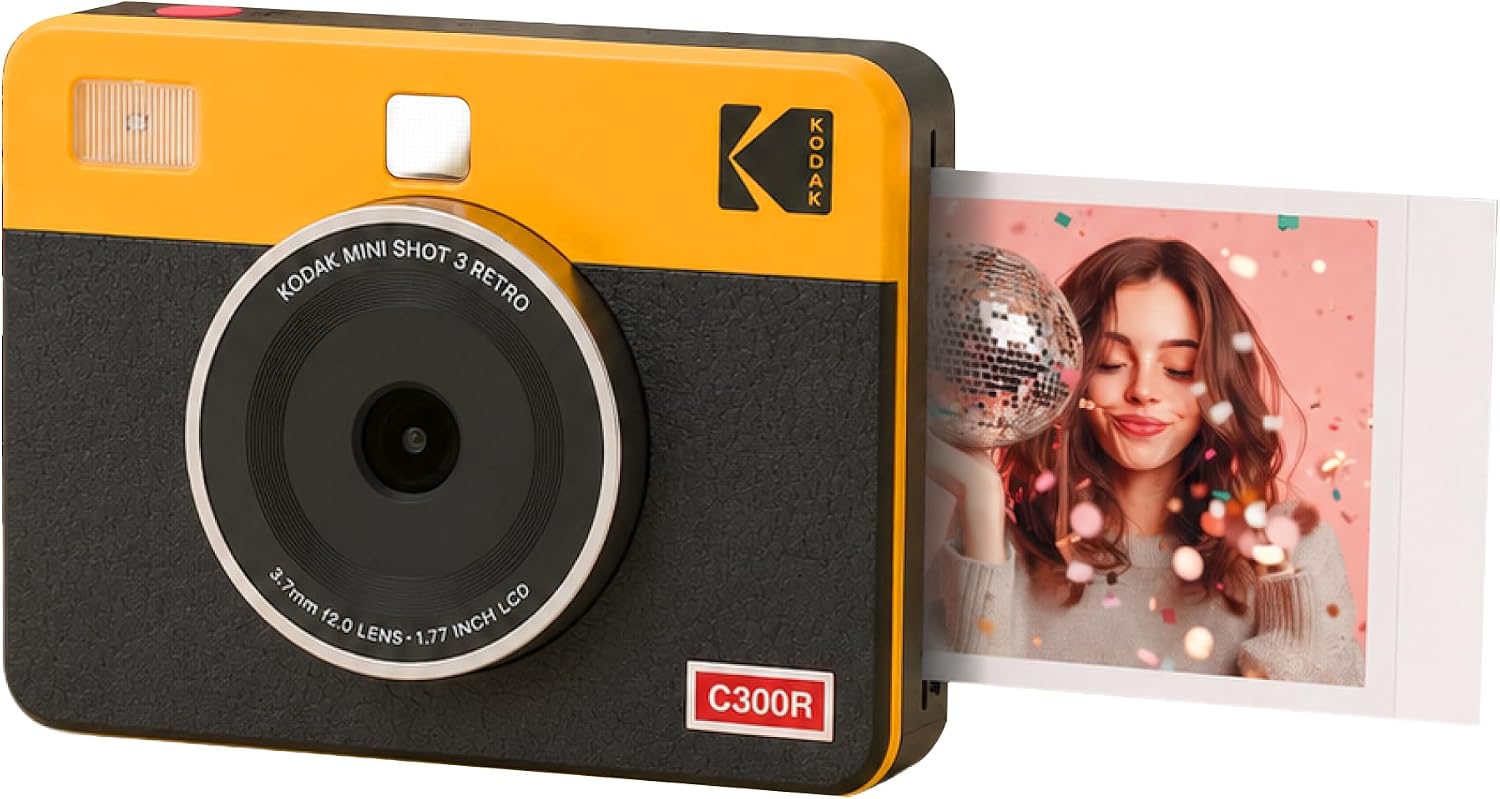
#1KODAK Mini Shot 3 Retro 3x3 Instant Camera and Photo Printer
Product overview
The Mini Shot 3 Retro is the most complete instant camera in this guide: a digital camera and a 3x3-inch photo printer in one body, with the option to print immediately or cancel a shot you don't like — the single biggest advantage digital instant cameras hold over classic film ones. The 4PASS printing process is the quality story: the photo is built in layers of color and then laminated, which is why the listing can claim fingerprint and water resistance along with a hundred-year lifespan. That lamination is also what makes the 3x3 prints feel like real photographs rather than flimsy receipts. The Bluetooth link to phones is the practical killer feature: any photo in your gallery — from a phone, a friend's phone, or a screenshot — can be sent to the printer and turned into a physical print, which effectively turns the camera into a home photo printer too. The KODAK app adds beauty filters, frames, and decorations before printing. Bordered and borderless modes cover both the journaling use case (write on the border) and the frame-it use case. Eight sheets are included to start. This is the machine to buy when you want one device that covers taking, printing, and phone-to-print.
Who it is for
✓Square-format lovers — 3x3 prints feel like classic instant film
✓Scrapbookers and journalers who want bordered prints to write on
✓Anyone who wants to print phone photos, not just camera shots
✓Gifting — the retro yellow body and included starter sheets
✓Buyers who want durable, laminated prints that survive handling
Who should skip it
–Buyers on the tightest budget — the Printomatic below is the cheaper entry
–Anyone who wants a smaller wallet-size print format
–Users who want to save photos to a memory card — no card slot is mentioned
–Photography learners — for actual photography skills, the DSLR on this list is the tool
Warranty and value
The Mini Shot 3 Retro's value is dual-purpose: camera and home photo printer in one. The ongoing cost is photo paper, which the listing notes is cheaper in bundle purchases — budget for paper the way you would budget for film.
#2KODAK Mini Shot 2 Retro 2x3 Instant Camera and Photo Printer
Product overview
The Mini Shot 2 Retro is the previous-generation sibling of the top pick, and the differences are almost entirely about print size: 2.1 x 3.4 inches instead of the Mini Shot 3's square 3x3 format. Everything else is the same proven recipe — a digital camera with a built-in 4PASS printer, layered-and-laminated prints with the hundred-year claim, bordered and borderless modes, Bluetooth printing from iPhone and Android galleries, and the KODAK app's filters and frames. Wallet-size prints have a genuine use case: they slot into photo albums, ID-style sleeves, and letters, and the smaller paper format means the per-sheet cost runs below the larger square stock. The tradeoff is that this is the older model, and at the time of writing the page shows no discount while the Mini Shot 3 carries one — so the newer, larger-format camera can actually cost less. Buy the Mini Shot 2 for the wallet-size format specifically or for a gift where the classic white retro body fits the recipient; otherwise the Mini Shot 3 is the better deal on paper.
Who it is for
✓Wallet-size prints that fit albums, letters, and sleeves
✓Gift buyers who want the classic white retro look
✓Lower-cost paper refills than the larger square format
✓Anyone who wants the same 4PASS quality in a smaller size
✓Journalers who paste prints into notebooks
Who should skip it
–Deal hunters — the page currently shows no discount, while the Mini Shot 3 does
–Square-format fans — this prints rectangular wallet size
–Buyers who want the newest model
–Photography learners — this is a point-and-shoot, not a learning tool
Warranty and value
The Mini Shot 2's value is format: wallet-size prints and cheaper refills. The honest caveat is the current lack of a discount relative to its successor — compare live prices before choosing between the two Mini Shots.
#3Canon EOS Rebel T7 DSLR Camera with EF-S 18-55mm Lens Kit
Product overview
The Rebel T7 is on this list for the readers who search for instant cameras and realize mid-search that what they actually want is to learn photography. It is the standard beginner DSLR: a 24.1-megapixel APS-C sensor, the bundled EF-S 18-55mm image-stabilized zoom lens, and the full manual exposure controls that smartphones and instant cameras deliberately hide. The learning path is real — aperture, shutter speed, and ISO are physical dials here, and the optical viewfinder with 95% coverage teaches framing the way a screen cannot. The 9-point autofocus with AI Servo tracks moving subjects, and built-in Wi-Fi and NFC move photos to a phone for sharing. Two practical bonuses: the lens mount takes the entire Canon EF-S ecosystem, so the camera grows with the photographer, and the EOS Utility Webcam software turns it into a surprisingly good webcam for streaming. What it does not do is print anything — there is no built-in printer, no instant paper, and no retro charm. The honest framing: buy this to learn photography and produce images that outclass every instant camera; buy a KODAK on this list for physical prints in seconds. Many households genuinely want both.
Who it is for
✓Beginners who want to learn aperture, shutter speed, and ISO properly
✓Buyers who want interchangeable lenses and room to grow
✓Anyone who needs a webcam-quality upgrade via the EOS Utility software
✓Photo quality first — 24MP APS-C outclasses every instant camera here
✓Students and hobbyists entering the Canon lens ecosystem
Who should skip it
–Buyers who want physical prints in seconds — there is no printer built in
–Kids' gift buyers — this is a serious camera, not a party toy
–Point-and-shoot users who never plan to touch manual settings
–Anyone who wants pocketability — a DSLR with kit lens needs a bag
Warranty and value
The Rebel T7 kit has been the default first-camera recommendation for years because it bundles a body, a stabilized zoom lens, and the full Canon lens ecosystem at the entry price. The value is the upgrade path: the camera body lasts through years of lens and skill growth.
#4KODAK Printomatic Full-Color Instant Print Digital Camera, Zink 2x3" Sticky-Back
Product overview
The Printomatic is the most-purchased instant camera on this list, and its design explains why: it is the pure point-and-shoot experience — frame through the optical viewfinder, press the button, and a 2x3-inch print comes out the top while the camera is already taking the next shot. The Zink printing technology is the key difference from the Mini Shot models: zero-ink paper that is heat-activated, so there are no cartridges, toners, or film to buy beyond the paper itself, and the prints come out water-resistant, tear-resistant, and smudge-free. The sticky-back paper is a quietly brilliant party feature — prints become stickers for notebooks, lockers, and fridges the moment they cool. The camera is genuinely pocketable, the flash turns on automatically in low light via a light sensor, and photos save to a MicroSD card for reprints later. The tradeoffs are honest ones: a 5MP sensor means the photos are for memory-making, not pixel-peeping, and no USB cable is included for transferring files. It is the cheapest entry point on this list and the one to hand to a kid or bring to a party — exactly the use case where the fancier Mini Shots would be overkill.
Who it is for
✓Kids and party use — pocketable, automatic, and instantly fun
✓Sticker lovers — sticky-back prints go straight onto notebooks and fridges
✓Budget buyers who want the most-purchased instant camera
✓Anyone who wants zero-ink simplicity — no cartridges or toner ever
✓Event hosts who want guests taking home physical prints
Who should skip it
–Buyers who want phone-to-printer Bluetooth printing — this is camera-only
–Photo-quality purists — 5MP is memory-tier, not portfolio-tier
–Anyone who wants larger square prints — this is a 2x3 format
–Users who expect a USB cable in the box — the listing says it is not included
Warranty and value
The Printomatic is the lowest-cost instant camera on this list, and its ongoing cost is just Zink paper refills — no ink or film systems to maintain. For kids, parties, and casual memory-making, it delivers the most fun per dollar of the four.
The four cameras in this guide cover three KODAK instant printers and one beginner DSLR — because a surprising number of people shopping for instant cameras discover along the way that what they actually want is a real camera. We kept the DSLR in the list and flagged it honestly below. Every spec comes from the manufacturers' listings, and where a listing doesn't disclose something, we say so instead of guessing.
4PASS vs Zink: Two Ways to Print Without Ink
Instant cameras print in two fundamentally different ways, and the difference shows in the photos. The Mini Shot models use 4PASS dye-sublimation: the print passes through the printer four times, once per color layer plus a laminate coat. That lamination is why KODAK can claim those prints resist fingerprints and water and last over a hundred years — they feel like real photographs. The Printomatic uses Zink zero-ink paper, which is heat-activated with dye crystals embedded in the paper itself. No cartridges, ever, and the prints come out water-resistant and smudge-free, but the finish is closer to a coated sticker than a laminated photo. Neither is strictly better: 4PASS wins on archival feel, Zink wins on simplicity and cost per sheet.
Photo Paper Cost: The Spec That Decides Long-Term Value
The purchase price of an instant camera is only the entry fee — the real ongoing cost is paper, and it is worth thinking about before choosing a format. Smaller sheets cost less per print, which is why the Mini Shot 2's wallet-size format and the Printomatic's 2x3 Zink paper are cheaper to feed than the Mini Shot 3's larger square sheets. KODAK's listings point out that paper bought in bundles runs about half the per-sheet cost of single packs, and the same applies to Zink refills. When you compare instant cameras, think in terms of a year of printing: the camera whose paper you can afford to actually use is the better camera.
Instant Camera with Built-In Printer: Why It Beats a Separate Printer
The Mini Shot 3 and Mini Shot 2 are digital cameras with printers built in, and that hybrid design changes how the camera gets used. You can shoot first and decide to print later — or not at all — which eliminates the wasted-paper problem of classic instant film. The Bluetooth link extends it further: photos from any phone in the room can be sent to the camera for printing, which turns the Mini Shots into small home photo printers for the whole family. Compare that with the Printomatic's shoot-and-print-only flow, and the difference is control: the Mini Shots are photo tools, while the Printomatic is a fun machine. Both are valid — the choice is whether you want curation or spontaneity.
Instant Cameras for Kids and Parties: What to Look For
For kids and parties, durability and zero-decisions matter more than print quality. The Printomatic is the fit: pocketable, an automatic flash, an optical viewfinder, sticky-back prints that become stickers, and no settings to misconfigure. The 5MP sensor is exactly right for the use case — kids don't pixel-peep, they stick photos on the fridge. The Mini Shots are too good to waste on small hands: laminated prints are more expensive to burn through during a giggle session, and the Bluetooth printing workflow assumes an adult operating a phone. Party hosts buying one camera for a crowd should default to the Printomatic and save the Mini Shots for thoughtful, curated printing.
Instant Camera vs Polaroid: What's the Difference?
Polaroid and KODAK instant cameras look similar from ten feet away and work nothing alike up close. Classic Polaroid-style cameras use instant film chemistry — packs of film sheets that develop over minutes, with that characteristic white frame and soft look. The KODAK machines here are digital cameras with printers: the photo is captured digitally, then printed on paper, which means you can review, retake, and print multiple copies. Digital-plus-printer wins on control and cost per print; instant film wins on the authentic analog look and the ritual of watching a photo develop. If you want the chemistry and the ceremony, buy a Polaroid-style camera; if you want prints that survive handling and the ability to print from phones, the KODAK approach is the practical one.
Why a Beginner DSLR Is on an Instant Camera List
The Canon Rebel T7 is here because the search path is real: shoppers looking for instant cameras frequently realize they actually want to take better photos, not print mediocre ones. The T7 is the standard answer for learning photography — a 24.1-megapixel APS-C sensor, a bundled stabilized zoom lens, manual exposure controls, and the entire Canon EF-S lens ecosystem to grow into. Its images outclass every instant camera here by an order of magnitude, and its webcam software makes it useful even when not shooting. The honest tradeoff is that it prints nothing — the instant cameras on this list exist for physical output, and the T7 exists for photographic skill. Know which goal you have, and the right choice becomes obvious.
Frequently Asked Questions
The KODAK Mini Shot 3 Retro is the best all-around pick: 3x3 square prints with 4PASS lamination, Bluetooth printing from phones, bordered and borderless modes, and a starter pack of sheets. For kids and parties, the KODAK Printomatic is the cheaper, simpler choice.
4PASS builds the photo in four passes — color layers plus a laminate — producing fingerprint- and water-resistant prints with a real-photo feel. Zink uses heat-activated dye crystals embedded in the paper, so there are no cartridges or toner; prints come out water-resistant and smudge-free with a coated, sticker-like finish. 4PASS wins on archival feel, Zink on simplicity and per-sheet cost.
Paper is the ongoing cost of any instant camera, and smaller formats cost less per sheet. KODAK's listings state that bundle purchases roughly halve the per-sheet cost compared with single packs, and Zink refills for the Printomatic are likewise cheaper in multi-packs. Budget for paper the way film shooters budget for film.
Yes, on the Mini Shot 3 and Mini Shot 2 — they print directly from iPhone, iPad, and Android galleries over Bluetooth, with the KODAK app adding filters, frames, and decorations. The Printomatic is camera-only: it prints what it shoots and saves to a MicroSD card.
The KODAK Printomatic is the kids' pick: pocket-sized, automatic flash, an optical viewfinder, sticky-back prints that become stickers, and no settings to break. The Mini Shot models are better kept for adults and careful use — their laminated prints cost more per sheet to burn through during play.
Polaroid-style cameras use instant film chemistry that develops over minutes with the classic white frame and soft look. KODAK's instant cameras are digital cameras with printers inside — you can review, retake, and print multiple copies, and print from phones. Digital-plus-printer wins on control and cost; instant film wins on the analog ritual.
If your goal is learning photography — manual exposure, interchangeable lenses, real image quality — the T7 delivers what no instant camera can: a 24.1MP APS-C sensor, the Canon EF-S lens ecosystem, and full manual controls. The tradeoff is that it prints nothing. Instant cameras make memories physical; the T7 makes you a better photographer.
According to KODAK's listings, 4PASS prints are laminated and rated to last over a hundred years, while Zink prints are water-resistant, tear-resistant, and smudge-free. Both are brand claims, but the lamination on 4PASS prints is a real physical difference that protects against handling — store any instant print away from direct sunlight for the longest life.
Get weekly top picks
Data-ranked products delivered to your inbox every week. Skip the research, get the winners.
No spam ever. Unsubscribe anytime. We respect your inbox.