Best Mobility Aids for Adults 2026
Discover the best mobility scooters and recovery aids for home, outdoor, and travel use. Our top picks include electric scooters, knee scooters, and transport wheelchairs with comfort, stability, and convenience.
We may earn a commission from links on this page.

Top Picks Compared
1. BlessReach Compact Knee Scooter for Adults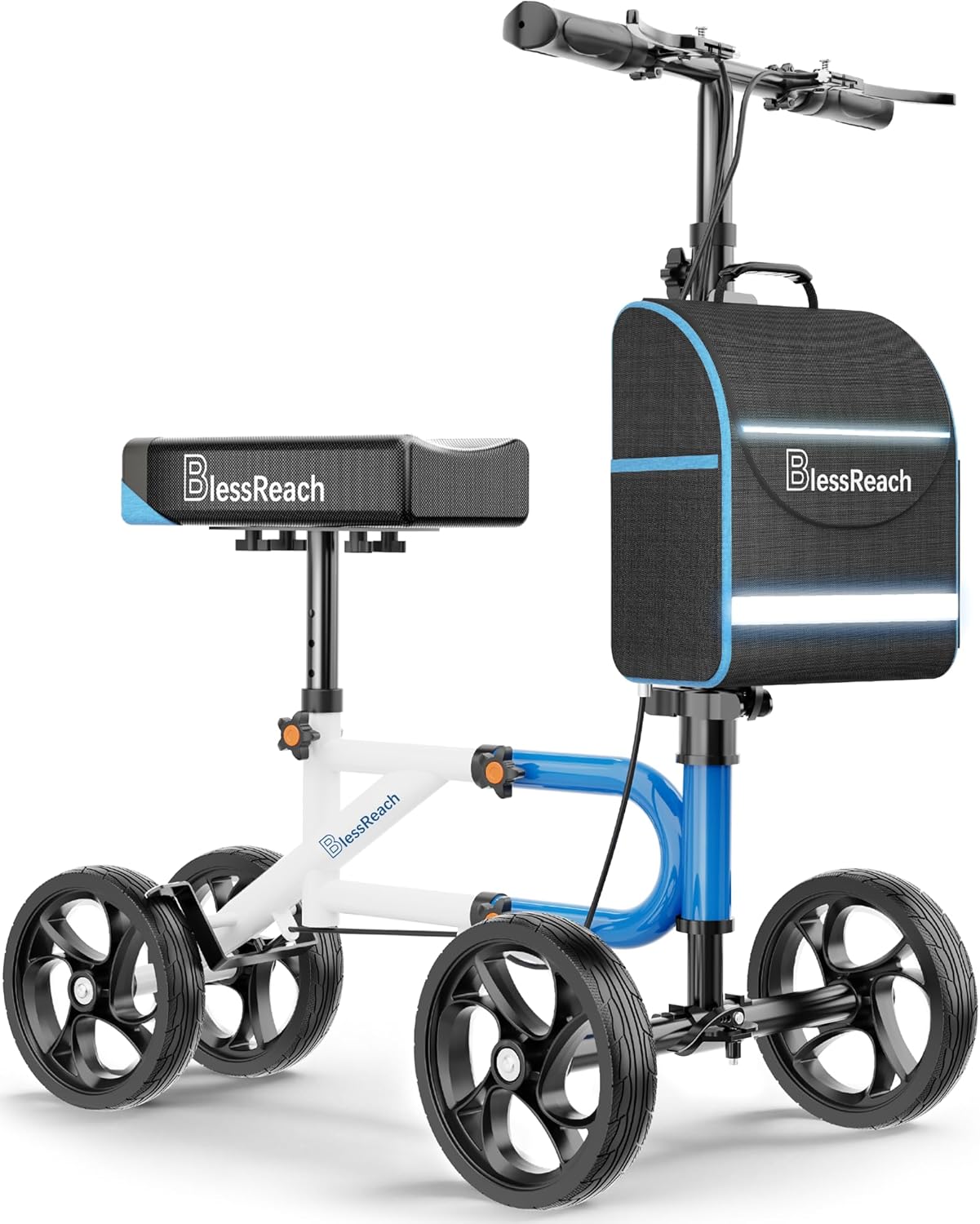 BLESSREACH | 2. BlessReach All-Terrain Foldable Knee Scooter BLESSREACH | 3. Ecomobi MS02 4-Wheel Mobility Scooter ECOMOBI | 4. 41 lb Foldable 4-Wheel Mobility Scooter 41 | 5. 17-Inch Lightweight Folding Transport Wheelchair 17-INCH | |
|---|---|---|---|---|---|
| Our Score | 9.8 | 9.7 | 9.6 | 9.5 | 9.3 |
| Deal | — | — | — | — | — |
| Type | Knee scooter | All-terrain knee scooter | 4-wheel scooter | 4-wheel scooter | Transport wheelchair |
| Weight Capacity | Standard | 300 lb | 300 lb | 300 lb | 350 lb |
| Range / Wheels | 8-inch wheels | 11" front / 9" rear | Up to 20/35/45 mi | Up to 12-24 mi | 360° casters |
| Portability | Foldable, removable parts | Foldable | Separates for transport | 41 lb, folds intact | 20 lb, folds w/ pull handle |
| Braking | Locking handbrake | Disc + locking brake | Braking system + anti-tip | Electromagnetic brake | Attendant brakes |
| Best For | Crutch alternative | Grass, gravel & dirt | Long-range daily use | Airline travel | Attendant-pushed transport |

Mobility Aid Buying Guide
Knee scooters, electric mobility scooters, and transport wheelchairs solve different mobility problems. The safest choice depends on the user's diagnosis, weight-bearing restrictions, balance, strength, cognition, transfer ability, environment, and caregiver support. A healthcare professional or physical therapist should confirm that the device matches the individual's recovery plan and functional needs. Product specifications help compare options, but they do not replace a clinical mobility assessment, fitting, or training.
Choose the Correct Type of Mobility Aid
A knee scooter supports the lower leg on a padded platform and requires the user to steer, balance, brake, and propel with the uninjured leg. It may suit certain below-knee injuries when a clinician permits it, but it is not appropriate for every surgery or balance condition. An electric mobility scooter provides seated powered travel for users who can transfer and operate a tiller safely. A transport wheelchair is pushed by an attendant and is intended for users who need seated transport rather than independent propulsion.
Fit, Weight Capacity, and User Measurements
Never exceed the listed weight capacity, and remember that bags, oxygen equipment, and carried items add to the total load. Knee-platform height should allow the supported leg to rest without twisting the hip while the standing leg remains stable. Scooter seats, armrests, tillers, and footboards must accommodate the user's body and transfer technique. For wheelchairs, seat width and depth affect posture, skin pressure, and access through doors. A rehabilitation professional can help with measurements and positioning when needs are complex.
Balance, Braking, and Control
Knee-scooter users need enough balance and hand function to steer and operate brakes. Practice starts, stops, turns, doorways, and controlled speeds on a clear level surface before entering public areas. Mobility scooters require safe throttle, steering, braking, and judgment around pedestrians. Transport-wheelchair attendants should learn the brake and parking controls before transfers. Brakes reduce movement but do not make slopes, wet surfaces, curbs, or unstable ground automatically safe.
Indoor, Pavement, and All-Terrain Use
Small wheels and narrow frames turn easily indoors but can catch on thresholds, cracks, gravel, or soft ground. All-terrain knee scooters use larger wheels and may improve stability on uneven surfaces, though they remain vulnerable to slopes, obstacles, and sudden stops. Four-wheel mobility scooters generally feel stable on common paved surfaces but have larger turning circles than many three-wheel designs. A product described for outdoor use should still stay within its stated slope, obstacle, weather, and surface limits.
Portability and Vehicle Loading
Compare the heaviest component, not only the total assembled weight. A scooter that separates into pieces may still have a base too heavy for one person to lift safely. Folding models reduce storage space but can remain awkward because of their dimensions and batteries. Measure the vehicle opening, cargo floor, and available height before buying. Use safe lifting techniques, ramps, hoists, or caregiver assistance when required, and secure the device so it cannot move during transport.
Mobility Scooter Range and Batteries
Advertised range is an estimate under specific conditions. Rider and cargo weight, speed, hills, temperature, tire condition, stop-and-go use, battery age, and surface all affect real distance. Plan a reserve rather than attempting to use the full stated range. Charge only with the approved charger, keep connectors dry, follow storage guidance, and inspect the battery regularly. A removable battery can simplify indoor charging, but its weight and handling still need to suit the user or caregiver.
Airline and Cruise Travel
A listing that says airline friendly does not guarantee automatic acceptance. Airlines apply battery chemistry, watt-hour, terminal-protection, documentation, and handling rules, and policies can change. Contact the airline or cruise line before travel with the exact device and battery specifications. Allow extra time for check-in, label removable parts, photograph the equipment, and carry required battery documentation. Do not assume that a mobility scooter can be stored in an aircraft cabin.
Transfers and Caregiver Use
Stable transfers require brakes engaged, footrests moved out of the way, suitable footwear, and a clear surface. Rotating armrests and swivel seats may help, but they must lock correctly before travel. A transport wheelchair depends on an attendant for propulsion and control; the attendant should understand parking brakes, ramps, thresholds, and safe handling. Users at risk of falls, pressure injury, or difficult transfers should receive individualized instruction from a qualified professional.
Maintenance and Pre-Ride Checks
Before use, inspect brakes, wheels, tires, steering, fasteners, folding locks, seat or knee pad, battery level, and any anti-tip components. Keep moving parts and electrical systems maintained according to the manual. Stop using equipment that pulls to one side, has loose controls, damaged wheels, cracked frames, intermittent power, or unreliable brakes. Periodic professional service may be appropriate for powered scooters or heavily used mobility equipment.
FAQ
It depends on the injury, weight-bearing restriction, balance, strength, environment, and training. A knee scooter can reduce upper-body demand for some users but requires steering, braking, and balance. Ask the treating clinician or physical therapist which device is appropriate.
A mobility scooter is powered and controlled by the seated user with a tiller. A transport wheelchair is normally pushed and controlled by an attendant. They require different transfer ability, control skills, space, transport planning, and caregiver support.
Use the manufacturer's listed range only as an estimate. Actual distance changes with rider weight, cargo, hills, speed, temperature, battery health, and surface. Plan a substantial reserve and recharge according to the battery instructions.
Possibly, but approval depends on the exact battery, device, airline, and route. Contact the airline before travel and provide battery chemistry, watt-hours, removal instructions, and documentation. Follow terminal-protection and handling rules specified by the carrier.
The capacity must exceed the combined weight of the user and everything carried on the device. Do not choose by capacity alone; seat fit, balance, component weight, controls, environment, and clinical needs are equally important. A professional fitting is advisable when needs are complex.
Get weekly top picks
Data-ranked products delivered to your inbox every week. Skip the research, get the winners.
No spam ever. Unsubscribe anytime. We respect your inbox.