How to Choose a Cordless Robotic Pool Cleaner
Use this cordless pool cleaner buying guide to compare battery life, coverage, wall climbing, navigation, filtration, and pool compatibility.
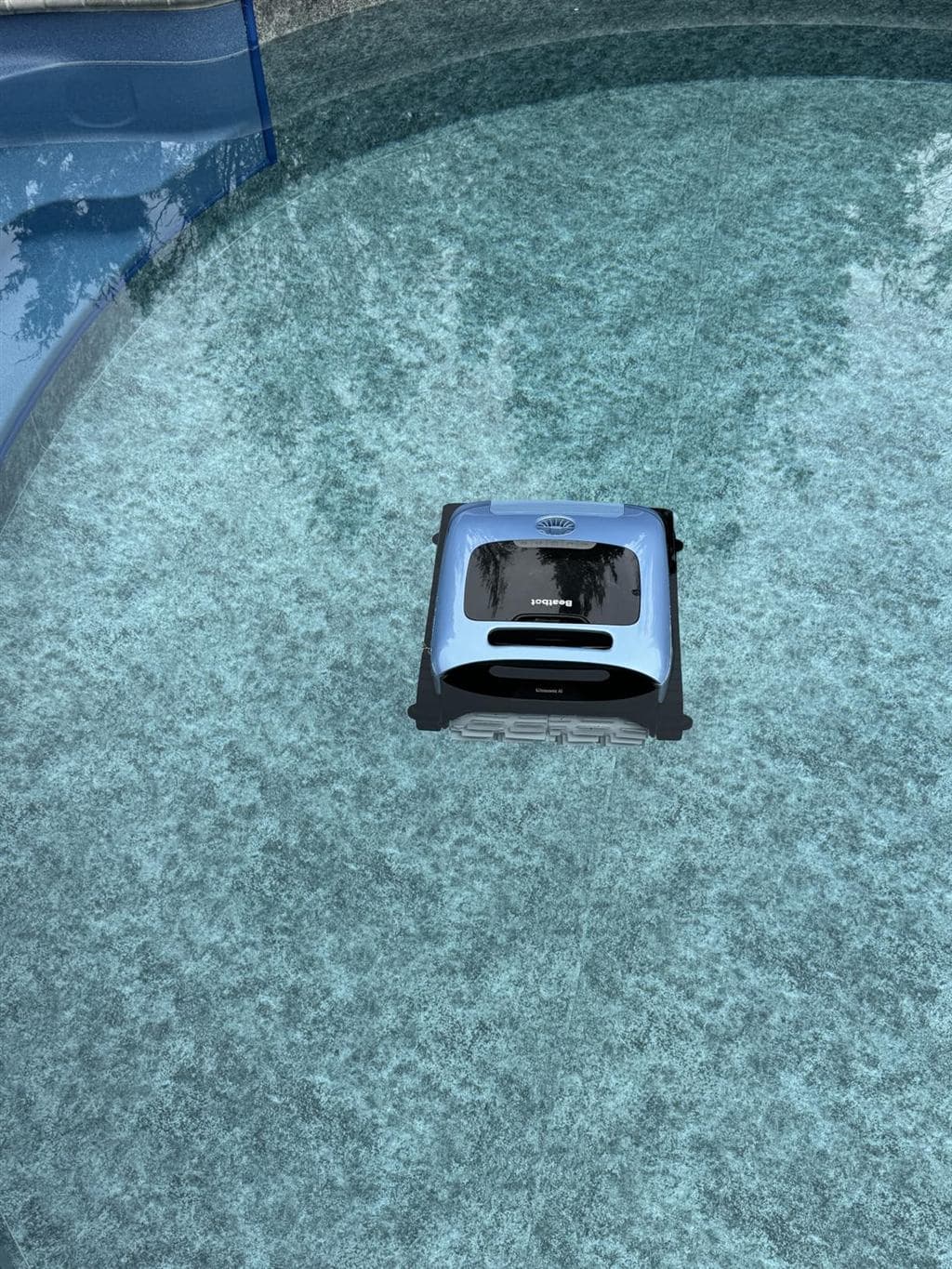
Learning how to choose a cordless robotic pool cleaner starts with the pool itself. Length, shape, depth, surface material, slope, steps, drains, debris, and desired cleaning area all determine whether a robot can complete a useful cycle. A long runtime or large suction number cannot compensate for poor compatibility.
This cordless pool cleaner buying guide explains floor coverage, wall climbing, waterline scrubbing, navigation, battery life, filtration, retrieval, maintenance, and long-term ownership cost. Use it to compare cordless pool robots based on real cleaning needs rather than choosing the model with the longest feature list.
Cordless robotic pool cleaner guide at a glance
| Pool or cleaning need | Features to prioritize | What to verify |
|---|---|---|
| Small flat-bottom pool | Reliable floor coverage, simple retrieval, easy filter cleaning | Supported dimensions, surface type, minimum depth, and drain handling |
| Large in-ground pool | Long effective runtime, efficient navigation, adequate filter capacity | Whether one charge completes the selected cleaning mode |
| Walls and waterline | Strong traction, active brushes, dedicated wall or waterline mode | Compatibility with the wall material, slope, curves, and ledges |
| Heavy leaves | Large debris basket, wide intake, accessible top-load filter | Whether oversized leaves or twigs can block the intake |
| Sand or fine debris | Fine filtration, sealed filter basket, effective floor contact | Filter rating, available fine-filter accessories, and cleaning frequency |
| Irregular pool shape | Adaptive navigation, obstacle handling, multiple cleaning modes | Performance around steps, benches, drains, corners, and transitions |
1. Confirm pool size, shape, and surface compatibility
Start with the manufacturer's supported pool length, depth, and type. Check whether the cleaner is intended for in-ground pools, above-ground pools, or both. A maximum pool length is more useful when paired with the runtime and cleaning pattern; a robot may technically enter a larger pool yet fail to cover it before the battery is depleted.
Surface compatibility affects traction and scrubbing. Vinyl, fiberglass, concrete, plaster, pebble, and tile can behave differently under tracks, wheels, and brushes. Confirm whether the robot can manage the floor slope, curved transitions, main drains, rounded walls, sharp corners, ledges, and any raised safety drain covers.
2. Decide which areas the robot must clean
Cordless pool cleaners fall into different capability levels. Floor-only models focus on settled debris and are often lighter and less expensive. More advanced robots climb walls, scrub the waterline, or provide separate floor, wall, and full-pool modes. Do not assume that a product described as an in-ground pool cleaner automatically climbs walls.
- Floor cleaning targets leaves, sand, insects, and sediment that settle on the bottom.
- Wall climbing requires enough traction and suction to remain attached on vertical surfaces.
- Waterline cleaning needs the robot to stay near the surface and move laterally along the edge.
- Steps and benches are difficult because they may be too narrow, shallow, or irregular for the robot.
- Tanning ledges may be outside the supported depth even when the main pool is compatible.
- A robotic cleaner does not replace brushing every corner or maintaining water chemistry.
3. Evaluate navigation and real pool coverage
Navigation determines how efficiently a cordless robotic pool cleaner uses its battery. Basic models may change direction after contacting a wall, while advanced robots use sensors, gyroscopes, algorithms, or mapped patterns to reduce repeated passes. Marketing terms such as smart navigation are not standardized, so look for evidence of consistent coverage in pools similar to yours.
Obstacles can disrupt even a capable navigation system. Raised drains, loose ladders, return fittings, toys, wrinkled liners, and sharp transitions may trap or redirect a robot. If possible, review the manual for minimum clearance and obstacle guidance. A shorter, systematic cycle can clean more effectively than a longer random cycle that repeatedly covers the same area.
4. Compare battery life with cleaning-cycle length
Cordless pool cleaner battery life is usually advertised as a maximum runtime. Actual runtime can change with cleaning mode, wall climbing, water temperature, battery age, debris load, pool resistance, and how much power remains after storage. Match the expected runtime to the time needed to cover the intended pool area, not simply to the highest number available.
Charging time matters when one cycle may not be enough. Some models require several hours before they can return to the water. Check whether the battery is sealed inside the robot or user-replaceable, how charge status is displayed, and whether the warranty treats the battery differently from the rest of the machine.
| Battery specification | Why it matters | Question to ask |
|---|---|---|
| Maximum runtime | Sets an upper limit on each cleaning cycle | Is the rating for floor mode or the most demanding full-pool mode? |
| Charging time | Determines how quickly another cycle can begin | Can the charger safely remain connected after charging? |
| Battery indicator | Helps plan cleaning and storage | Is status visible on the robot, charger, app, or all three? |
| Battery serviceability | Affects repairability after capacity declines | Can an authorized service center replace the battery? |
| Temperature limits | Lithium batteries require appropriate charging and storage conditions | What air temperature and drying conditions are required before charging? |
5. Match filtration to leaves, sand, and fine debris
The best cordless pool cleaner for leaves may not be the best model for fine dust. A wide intake and large basket help with leaves, insects, and small twigs. A finer mesh captures sand, pollen, silt, and small particles but may restrict flow sooner and require more frequent rinsing. Pools with mixed debris benefit from layered filters or interchangeable filter options.
Basket access has a major effect on ownership. Top-loading filters are often easier to remove without turning over a wet robot. Check whether debris spills back into the pool during retrieval, whether the panels can be opened with gloves, and whether the basket corners are easy to rinse. Filter volume matters more than an unqualified large-capacity claim.
6. Look at brushes, suction, and mobility together
Suction flow moves loose debris into the filter, while active brushes help loosen material attached to the surface. Compare the complete cleaning system rather than one suction number. Brush material, contact pressure, intake width, filtration resistance, vehicle speed, and route coverage all affect pickup.
Tracks can provide useful traction on slopes and walls, while wheels may reduce complexity and move efficiently on flat floors. Neither is automatically superior. The right design depends on the surface, wall angle, drain covers, and obstacles. Replacement brushes, tracks, wheels, and filter parts should be available because these components wear over time.
7. Plan retrieval before buying
A cordless design removes the floating power cable, but it also removes the cable that some owners use to guide a traditional robot toward the edge. Check how the cleaner ends a cycle. It may park near a wall, climb briefly for pickup, respond to an app command, or include a retrieval hook. Parking behavior can vary with pool geometry and remaining battery.
Review the wet weight and handle position. Water trapped in the filter can make a robot feel much heavier during lifting. A drain-back design helps, but users should still lift with stable footing and keep the unit close to the body. Never pull the robot out by a charging cover, brush, or other part not designed as a handle.
8. Decide whether app controls are useful
Bluetooth and Wi-Fi features may provide mode selection, scheduling, battery status, firmware updates, or retrieval commands. Radio signals travel poorly through water, so some controls work only when the cleaner is at the surface or out of the pool. Confirm exactly which features function underwater and whether the robot can complete normal cleaning without the app.
Scheduling a cordless robot is different from scheduling a wired model because the battery eventually needs manual charging and many manufacturers do not recommend indefinite submersion. Multi-day parking modes may periodically wake the robot, but owners must still follow limits for water exposure, chemical levels, charging, and storage.
9. Calculate maintenance and ownership cost
A cordless robotic pool cleaner needs filter rinsing, brush inspection, intake clearing, charging-contact care, and periodic checks of tracks or wheels. Hair, string, leaves, and small twigs can wrap around moving parts. Regular cleaning maintains water flow and reduces unnecessary motor load.
- Compare prices for filter baskets, fine-filter panels, brushes, tracks, and retrieval accessories.
- Check battery warranty terms and authorized replacement options.
- Confirm local or mail-in repair support and expected shipping costs.
- Rinse debris according to the manual and allow the unit to dry before storage.
- Keep the charger protected from water, weather, and extreme temperatures.
- Store the robot away from direct sun and follow long-term battery-charge guidance.
10. Understand what a pool robot cannot do
A robotic pool cleaner collects physical debris but does not sanitize the water or correct pH, alkalinity, calcium hardness, salt, or disinfectant levels. It does not replace the circulation and filtration system. Algae attached to corners, steps, grout, or damaged surfaces may still require manual brushing and treatment of the underlying water-quality problem.
Remove swimmers before operating the cleaner and follow all electrical and pool-safety instructions. Take out large branches, toys, loose cords, and other objects that could jam the robot. If the pool is unusually cloudy, contains hazardous contamination, or has an active algae bloom, correct the water condition before relying on a routine cleaning cycle.
Cordless pool cleaner buying checklist
- Measure the pool and record its type, depth, shape, slope, and surface material.
- Decide whether you need floor-only, wall, or waterline cleaning.
- Check compatibility with steps, benches, drains, ledges, and irregular transitions.
- Match effective runtime and navigation to the actual cleaning area.
- Choose filter capacity and fineness for leaves, sand, pollen, or mixed debris.
- Review wet weight, handle design, parking behavior, and retrieval method.
- Compare charging time, battery warranty, temperature limits, and replacement support.
- Confirm app features work in the conditions where you intend to use them.
- Price replacement filters, brushes, tracks, and other wear parts before buying.
Frequently asked questions
The best answer to how to choose a cordless robotic pool cleaner is to match coverage, filtration, navigation, and battery runtime to one specific pool. Prioritize documented compatibility and easy retrieval over headline specifications. A well-matched robot can reduce routine debris cleaning, but it still works alongside proper circulation, water chemistry, manual brushing, and safe pool maintenance.
Compare the top picks
Our full rankings for the products covered in this guide.