What Size Portable Power Station Do I Need?
Calculate the right portable power station size using watts, watt-hours, surge output, usable capacity, runtime, and recharging needs.
If you are asking what size portable power station you need, start with two separate requirements: the maximum power your devices draw at one time and the total energy they consume over the hours you plan to use them. The first determines inverter output in watts; the second determines battery capacity in watt-hours.
This portable power station size guide shows how to calculate both numbers for camping, home backup, refrigerators, CPAP machines, electronics, and power tools. It also explains startup surge, conversion losses, battery chemistry, charging speed, solar input, portability, and the reserve capacity that marketing calculators sometimes overlook.
Portable power station sizing at a glance
| Typical use | Approximate capacity range | What to verify |
|---|---|---|
| Phones, lights, camera batteries, small electronics | 200-500Wh | USB output, device count, charging time, and whether AC outlets are necessary |
| Laptop work, internet equipment, short camping trips | 500-1,000Wh | AC efficiency, continuous wattage, quiet operation, and car or solar charging |
| Refrigerator support and essential outage loads | 1,000-2,000Wh | Compressor startup surge, measured appliance consumption, and recharge access |
| Extended camping, RV accessories, multiple appliances | 1,500-3,000Wh | Simultaneous loads, solar input, expansion batteries, weight, and connector compatibility |
| Larger home backup circuits or heavy tools | 2,000Wh and above | 240V support if required, transfer equipment, surge output, installation rules, and recharge time |
1. Understand watts, watt-hours, and amp-hours
Watts describe power at a moment in time. A 1,500W inverter can continuously supply compatible devices whose combined running load stays within that limit. Watt-hours describe stored energy. In simple terms, a 1,000Wh battery could theoretically supply 100W for 10 hours, but real runtime is lower because the inverter and electronics consume energy.
Amp-hours are incomplete unless voltage is also known. To make a rough comparison, multiply amp-hours by nominal voltage to obtain watt-hours. For example, 50Ah at 12V is approximately 600Wh. Product specifications may use nominal values, so compare the manufacturer's stated watt-hour capacity whenever possible.
- Watts tell you whether the inverter can operate a device.
- Watt-hours estimate how long the battery can operate that device.
- Surge watts describe short bursts needed to start some motors and compressors.
- Input watts determine how quickly compatible charging sources can refill the battery.
- Outlet type and voltage must match the equipment you intend to power.
2. Make a realistic device list
Write down every device you expect to run, its operating wattage, estimated daily runtime, and whether it might operate at the same time as another load. Do not size around every appliance you own. Separate essential outage loads from optional conveniences, because heating and cooling appliances can consume a large battery very quickly.
The rating label provides a useful starting point, but actual consumption may cycle or change by mode. A refrigerator compressor switches on and off, a laptop power adapter does not draw its maximum rating continuously, and a heated blanket changes with its setting. A plug-in electricity meter can provide a more reliable 24-hour measurement for standard household appliances.
3. Calculate the required battery capacity
For each device, multiply its average watts by the hours of use. A 60W laptop used for five hours requires roughly 300Wh. A 10W router running for 12 hours requires about 120Wh. Add the watt-hours for every device to estimate total energy demand.
Rated battery capacity is not the same as energy delivered from an AC outlet. Inverter conversion, internal controls, standby power, temperature, battery protection limits, and load size all affect usable capacity. For rough planning, many buyers add 15% to 30% above their calculated requirement, then add more reserve when the load is critical or recharging is uncertain. Manufacturer test conditions should be reviewed rather than assuming one universal efficiency percentage.
4. Check continuous and surge output
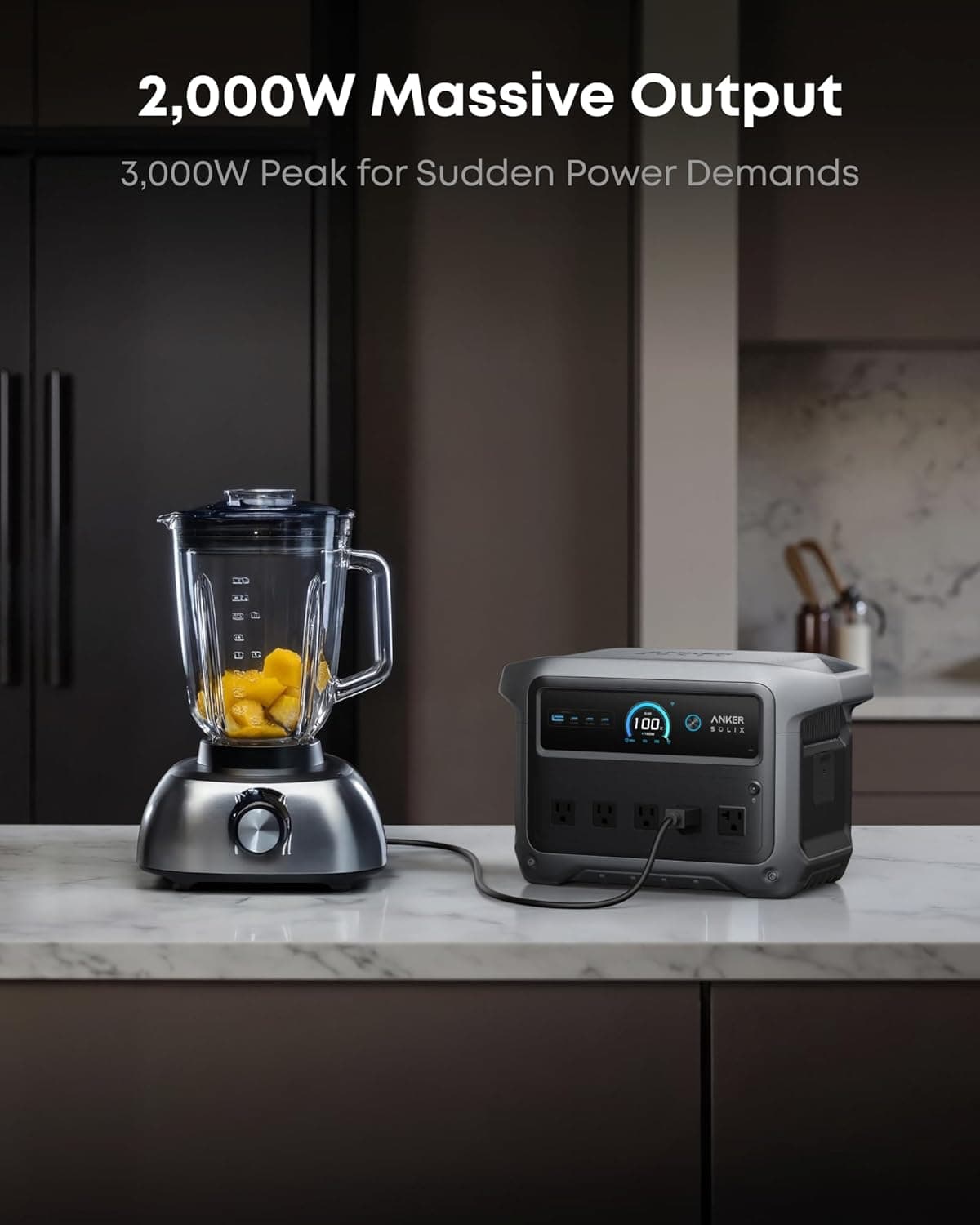
A power station can have enough watt-hours and still be unable to run an appliance. Add the wattage of devices that may operate simultaneously and keep the total below the unit's continuous AC output. Then identify the largest startup load. Refrigerators, pumps, air conditioners, and motor-driven tools may briefly demand much more power when starting.
Compare both the size and duration of the appliance surge with the power station specification. Some brands advertise a boost mode that lowers voltage or supports certain resistive loads above the normal rating; that is not equivalent to cleanly powering every device at the higher wattage. Sensitive electronics and motorized equipment should stay within the manufacturer's normal operating limits.
5. Estimate runtime for common uses
| Device example | Planning method | Common sizing mistake |
|---|---|---|
| Phone or tablet | Use battery watt-hours and include charging losses | Counting the power adapter's maximum wattage as a constant load |
| Laptop | Measure normal work consumption and multiply by work hours | Assuming the charger rating equals average usage |
| CPAP machine | Use the manufacturer's measured consumption with the exact humidifier and heater settings | Relying on a generic estimate for health-critical equipment |
| Refrigerator | Measure at least 24 hours and verify compressor surge | Multiplying the nameplate wattage by every hour even though the compressor cycles |
| Electric kettle or heater | Multiply the high wattage by actual minutes of use | Ignoring that resistive heat drains small batteries quickly |
| Power tool | Verify running watts, startup surge, and duty cycle | Choosing capacity without confirming inverter output |
Runtime estimates are planning tools, not guarantees. Battery condition, ambient temperature, fan operation, inverter efficiency, cable losses, and appliance behavior change the result. Test essential equipment before an emergency and leave enough reserve to handle a longer-than-expected outage.
6. Match the size to home backup needs
For short outages, a portable power station can keep communications, lights, medical equipment, and selected refrigeration running without fuel or indoor exhaust. Prioritize essentials and avoid electric space heaters, water heaters, ovens, and large air conditioners unless the system is specifically designed for those loads. Their high continuous demand can exhaust portable batteries rapidly.
Never connect a power station to home wiring through an improvised cable. Powering selected circuits requires compatible equipment and a properly installed transfer solution that follows local electrical rules and the power station manufacturer's instructions. A standard portable unit may provide only 120V and cannot run 240V loads even when its wattage appears sufficient.
7. Size a portable power station for camping and RV use
Camping loads often include lights, phones, cameras, a portable refrigerator, fans, and occasional cooking devices. Calculate energy for the entire trip, then subtract what you can realistically restore from driving or solar panels. A compact station may be more practical when it must be carried from a vehicle, while a larger expandable system can make sense for a base camp.
Check every connector before travel: regulated 12V output, USB-C power delivery, AC outlet count, and solar input voltage and current limits. RV air conditioners and microwaves require careful surge and runtime calculations. Confirm grounding and compatibility guidance for any equipment that performs an electrical safety check.
8. Plan how you will recharge it
The right portable power station capacity depends partly on recharge access. A smaller battery that can be reliably refilled each day may support a trip better than a larger unit with inadequate charging. Compare AC charging time, maximum solar input, car charging, generator compatibility, and whether inputs can be combined.
- Wall charging is usually fastest but may require a high-power household circuit.
- Solar panel ratings describe ideal output; weather, angle, shade, heat, and controller limits reduce real production.
- Vehicle accessory sockets are often slow and limited by the socket, fuse, cable, and charger.
- Alternator chargers may refill faster but must be correctly sized and installed for the vehicle.
- Pass-through charging should be used only as the manufacturer permits.
- Charging below freezing can damage some lithium batteries unless the system has suitable protection or heating.
9. Compare LiFePO4 and other battery chemistries
Many current portable power stations use lithium iron phosphate, commonly called LiFePO4 or LFP. It is valued for long cycle life and thermal stability, although it can weigh more for the same energy than some nickel manganese cobalt lithium batteries. Cycle-life claims depend on the test depth, temperature, charging rate, and the capacity threshold used by the manufacturer.
Battery management systems provide important voltage, current, and temperature protections, but they do not eliminate the need for correct use. Keep the station dry, maintain ventilation, use approved charging accessories, follow storage guidance, and stop using damaged or swollen equipment.
10. Balance capacity against weight and cost
More watt-hours usually mean more weight, volume, charging time, and expense. Check the actual weight and handle design rather than assuming portable means easy to carry. Wheels can help on smooth surfaces but add bulk. Expansion batteries provide flexibility, although cables, storage space, combined weight, and model compatibility still matter.
Also compare warranty length, battery-cycle terms, repair support, replacement accessories, app requirements, display readability, fan noise, and standby consumption. An inexpensive oversized battery is not good value if it is difficult to transport or lacks the outputs needed by your devices.
Portable power station buying checklist
- List essential devices, average watts, hours of use, and simultaneous loads.
- Calculate total watt-hours and add conversion losses and a practical reserve.
- Confirm continuous inverter output for the combined running load.
- Verify startup surge for refrigerators, pumps, air conditioners, and tools.
- Check outlet voltage, USB-C power, 12V regulation, and connector count.
- Plan realistic wall, vehicle, generator, or solar recharging.
- Compare battery chemistry, cycle life, safety certifications, and warranty.
- Consider weight, dimensions, handle or wheel design, and storage location.
- Test critical equipment and charging sources before an outage or trip.
Frequently asked questions
The best answer to what size portable power station you need comes from measuring real loads, not choosing the largest battery within budget. Calculate energy in watt-hours, verify continuous and surge watts, include efficiency losses, and build a realistic recharge plan. A correctly sized system gives you useful runtime without unnecessary weight, cost, or charging delays.
Compare the top picks
Our full rankings for the products covered in this guide.