Ultrahuman Ring AIR Review (2026): Is It Still Worth Buying Next to the Ring PRO?
A specification-led Ultrahuman Ring AIR review for 2026. We compare it directly against the newer Ring PRO, explain what the no-subscription policy actually saves you, and flag the one thing Ultrahuman has quietly changed about how it sells the AIR.
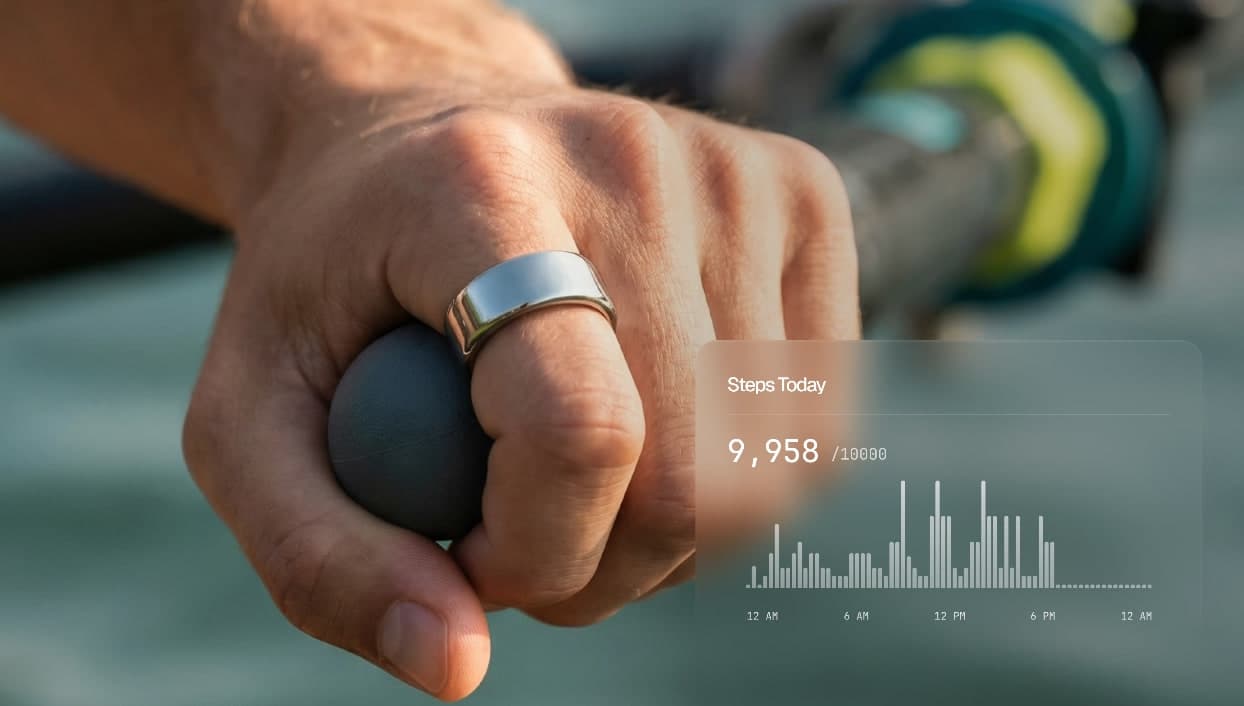
The Ultrahuman Ring AIR is the company's original smart ring: a lightweight titanium band that tracks sleep, movement and recovery without asking for a monthly fee. It built its reputation on two things — being genuinely thin, and refusing to put your own health data behind a subscription. Both of those still hold in 2026.
What has changed is the company around it. Ultrahuman now leads with the Ring PRO, and that shifts the question most people are really asking. It is no longer "is the Ring AIR any good?" It is "should I still buy the AIR, or pay up for the PRO?" That is the question this review is organised around.
The short answer
The Ring AIR remains a sensible buy for one specific type of person: someone who wants accurate overnight sleep and recovery tracking, in the thinnest possible ring, without a recurring bill. If that is you, the AIR still does the job and the PRO's upgrades are largely things you will never notice.
- Buy the Ring AIR if you want the thinnest ring, no subscription, and you are happy charging roughly once a week.
- Buy the Ring PRO if battery anxiety bothers you, or you want the longer on-device data storage and the safety-release design.
- Buy neither if you want a screen, GPS, or a device that doubles as a fitness watch — a ring is not that.
Ultrahuman Ring AIR specifications
These figures come from Ultrahuman's published specification table. The 2.4 mm thickness is the headline number: it is the reason the AIR still gets recommended over chunkier rivals for people with smaller hands or anyone who dislikes wearing jewellery to bed.
| Specification | Ultrahuman Ring AIR |
|---|---|
| Materials | Titanium with PVD coating |
| Inner surface | Hypoallergenic plastic |
| Thickness | 2.4 mm |
| Sensors | Temperature, PPG, 6-axis IMU |
| Processor | Single-core |
| Battery life | 4–6 days |
| Charging | Wireless charging pad, roughly 180 minutes to full |
| On-device storage | 4 days of data (internal flash only) |
| Water resistance | Up to 100 m (about 328 ft) for up to 12 hours |
| Calibration period | Up to 14 days |
| Subscription | Not required |
Two of those rows deserve a second look. The 14-day calibration period means the ring is learning your baseline for the first fortnight, so early scores are not representative — plan to ignore week one. And the 4-day on-device storage means that if you leave your phone behind for a long trip, the ring will eventually start overwriting data it has not yet synced.
Pros and cons
| Strengths | Trade-offs |
|---|---|
| At 2.4 mm it is thinner than the Ring PRO, and thin enough that most people forget they are wearing it overnight | 4–6 days of battery means a weekly charging habit, versus up to 15 days on the PRO |
| No mandatory subscription — the app and your data stay accessible without a recurring fee | Only 4 days of on-device storage, so extended time away from your phone costs you data |
| Titanium build with a hypoallergenic inner surface, rated to 100 m water resistance for up to 12 hours | Single-core processor with no on-device machine learning, unlike the PRO |
| Full sensor set for the category: temperature, PPG and a 6-axis motion sensor | No safety-release design — the PRO's ProRelease lets the ring be cut off if a finger swells |
| Ring sizes are confirmed with a free sizing kit before your ring ships | Ultrahuman's own marketing now points buyers toward the Ring PRO first |
Ultrahuman Ring AIR vs Ring PRO
This is the comparison that matters in 2026, so here it is with Ultrahuman's own figures side by side. The PRO is listed at $349; Ultrahuman does not publish a comparable standing price for the AIR, so check the current figure before you commit.
| Ring AIR | Ring PRO | |
|---|---|---|
| Thickness | 2.4 mm | 2.65 mm (varies by size) |
| Battery life | 4–6 days | Up to 15 days (about 12 in Turbo Mode, 15+ in Chill Mode) |
| Charger | Wireless pad, ~180 min to full | PRO Charging Case with UltraSnap magnetic charging |
| Extra battery from case | Not applicable | Up to 45 days |
| Processor | Single-core | Dual-core with on-chip machine learning |
| Heart-rate sensor | PPG | Redesigned PPG, improved signal quality in sleep and recovery |
| On-device storage | 4 days | Up to 250 days |
| Safety release | Not available | ProRelease — ring can be safely cut if the finger swells |
| Materials | Titanium, PVD coating | Titanium, PVD coating, epoxy, polycarbonate |
| Price | Check current pricing | $349 |
Read that table honestly and the PRO's advantages cluster around endurance and edge cases rather than everyday measurement. Both rings carry the same three sensor types. If you charge your ring while you shower and you keep your phone with you, the AIR's shorter battery and smaller buffer are close to irrelevant. If you hike, travel for weeks, or simply resent charging things, the PRO's fortnight of battery is a real quality-of-life upgrade.
One PRO feature is worth singling out because it is a safety matter rather than a spec-sheet win. ProRelease means the ring can be cut off if your finger swells — from injury, heat or pregnancy. Titanium rings are genuinely difficult to remove in an emergency, and the AIR does not offer this.
The subscription question
This is the strongest argument for either Ultrahuman ring, and it is the reason the AIR still appears in buying guides three years after launch. Ultrahuman does not charge a mandatory subscription to see your own data. Over a three-year ownership window that difference compounds into real money against rivals that do.
| Device | Pricing | Mandatory data subscription | Battery life |
|---|---|---|---|
| Ultrahuman Ring | $349 (Ring PRO) | Not required | 4 to 6 days (AIR) |
| Oura Ring | Base price plus an annual subscription | Required | Up to 7 days |
| Whoop Strap | $30 per month | Required — the hardware is the subscription | 5 days |
| Garmin Smartwatch | $199–$999+ | Not required | 5–14 days |
What Ultrahuman has quietly changed about the Ring AIR
Here is something you will not find in most Ring AIR reviews, and it is worth knowing before you buy. As of September 2026, Ultrahuman's dedicated Ring AIR product pages return a 404, and the company's US site canonicalises its ring pages to the Ring PRO. Every buy button on the homepage and the main ring page points to the PRO.
The AIR has not been discontinued. Ultrahuman's own homepage still describes the lineup as "two form factors: Ring PRO and Ring AIR", still advertises two-hour delivery on the AIR in selected cities, and still sells AIR gift cards. But the direction of travel is clear: the AIR is now the quiet option in the range, and the company would prefer you bought the PRO.
That matters for two practical reasons. Discounting on an older model tends to get better, so it is worth checking for an active offer rather than paying a standing price. And long-term firmware attention usually follows the flagship, so if you expect to keep a ring for four or five years, factor that in.
Who should skip the Ring AIR
- Anyone who wants live workout metrics on their wrist — a ring has no display and no GPS.
- People whose fingers swell regularly, or who work in environments where a ring cannot be cut off safely. The PRO's ProRelease design exists for exactly this reason.
- Buyers who travel for weeks away from a phone: 4 days of on-device storage is the binding constraint, not the battery.
- Anyone expecting a medical device. Ultrahuman states its ring is not intended for the diagnosis, treatment or prevention of disease. Its EU and UK Class IIa certification and US FDA registration describe regulatory status, not a promise of clinical accuracy.
Verdict
The Ultrahuman Ring AIR is still the right choice for the person who wanted it in the first place: someone after unobtrusive sleep and recovery tracking, in the thinnest ring available, with no subscription attached. Its weaknesses — a weekly charge and a small data buffer — are the kind you stop noticing after a fortnight.
The honest caveat is that Ultrahuman is steering buyers to the Ring PRO, and on battery life and safety design the PRO deserves that push. If the price gap is small when you check, buy the PRO. If the AIR is meaningfully cheaper, it remains one of the few health trackers that does not bill you monthly for your own data — and that is still rare enough to be worth something.
How we researched this review
Every specification in this article was taken from Ultrahuman's published product data and regulatory statements in September 2026, and cross-checked against the company's own PRO-versus-AIR comparison table. We did not test the ring on a wrist, and we have not reproduced any figure we could not trace to a source. Competitor pricing and subscription terms are Ultrahuman's characterisation of its rivals and are labelled as such above. This article contains affiliate links; if you buy through them we may earn a commission, which does not affect what we recommend.