How to Choose an Air Purifier for Your Home
Use this practical air purifier buying guide to compare CADR, room coverage, HEPA filters, noise, energy use, and replacement costs.
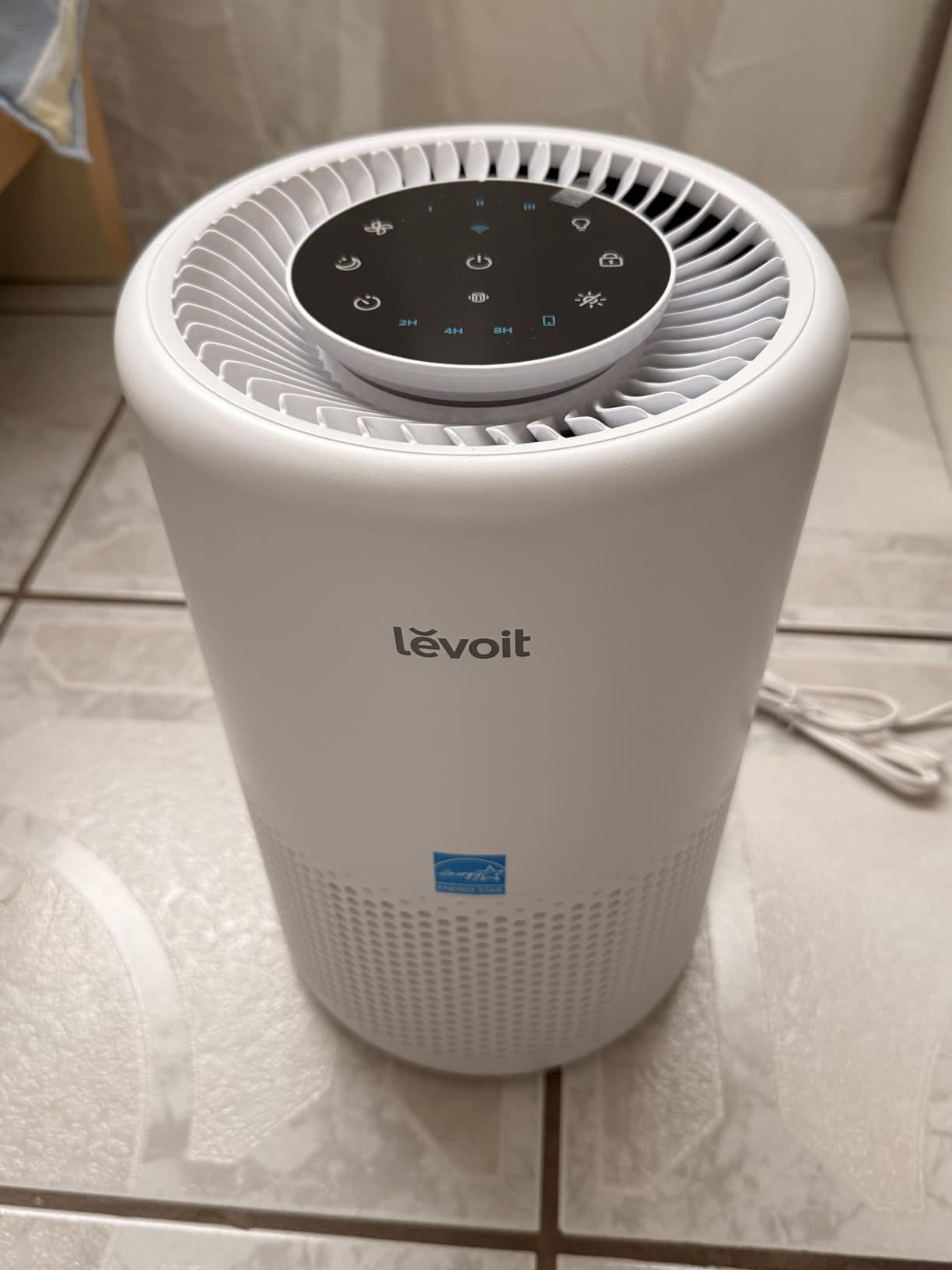
Learning how to choose an air purifier starts with the pollutant you want to reduce and the room where the machine will run. Pollen, pet dander, smoke particles, cooking odors, and gases require different filter capabilities, while room size and fan speed determine how quickly the air is cleaned. The best air purifier for your home is therefore not necessarily the model with the largest coverage claim.
This air purifier buying guide explains CADR, air changes per hour, HEPA filtration, activated carbon, noise, placement, energy use, and replacement-filter costs. It will help you compare models using useful specifications instead of relying on broad marketing language.
Air purifier buying guide at a glance
| Primary need | Features to prioritize | Important limitation |
|---|---|---|
| Seasonal allergies | High particle CADR, verified HEPA filtration, quiet continuous operation | A purifier reduces airborne pollen but cannot remove allergens already settled on surfaces. |
| Pets | Strong airflow, washable pre-filter, accessible intake, useful carbon layer | Most heavy pet hair falls to the floor and still requires regular vacuuming. |
| Wildfire smoke | High smoke CADR, sealed particle filter, substantial activated carbon | Standard particle filters capture soot but limited carbon may not control smoke gases or odor for long. |
| Bedroom | Low-speed efficiency, sleep mode, dimmable display, low noise | A large-room claim measured at maximum speed may not reflect quiet nighttime performance. |
| Cooking odors | Adequate activated carbon and strong airflow | No portable purifier replaces a vented range hood or safe ventilation. |
| Large room | Verified CADR, multiple air changes per hour, practical filter cost | Open layouts, high ceilings, doors, and furniture can reduce effective circulation. |
1. Identify what you want the air purifier to remove
Airborne contaminants fall into two broad groups: particles and gases. Dust, pollen, mold spores, pet dander, and smoke soot are particles that a suitable mechanical filter can capture. Odors and volatile organic compounds are gases, which require adsorbent media such as activated carbon. A machine optimized for pollen is not automatically the best air purifier for odors.
An air purifier only treats air that passes through it. It does not remove dust from furniture, repair a moisture problem, eliminate a mold source, ventilate a room, or replace a smoke or carbon-monoxide alarm. Source control, cleaning, humidity management, and outdoor-air ventilation remain part of a complete indoor air-quality plan.
2. Size an air purifier using CADR
Clean Air Delivery Rate, or CADR, describes how much filtered air a purifier supplies. It combines airflow with particle-removal efficiency and is usually reported in cubic feet per minute. Separate ratings may be provided for smoke, dust, and pollen because these particles differ in size. Higher CADR generally means faster cleaning in the same room.
CADR is more useful than a maximum square-foot claim because brands may calculate coverage using different air-change assumptions. A purifier advertised for a very large area may clean that space only once per hour. For bedrooms, allergy-sensitive spaces, or smoke, shoppers often want several complete air changes each hour rather than one slow pass.
- Measure room length and width, then multiply them to estimate floor area.
- Account for ceiling height because a tall room contains more air than a standard-height room.
- Check the CADR achieved at a speed you can tolerate, not only the loudest turbo setting.
- Choose extra capacity for open doors, connected rooms, high ceilings, smoke, or heavy allergen exposure.
- Consider two appropriately placed units when one purifier cannot circulate air through a divided floor plan.
3. Understand HEPA filters and efficiency claims
A HEPA air purifier uses dense mechanical media to capture fine airborne particles. Filtration labels matter, but the complete machine matters too. Air can bypass an excellent filter if the housing is poorly sealed, and a highly efficient filter paired with weak airflow may clean a room slowly. Look for credible performance data for the assembled purifier.
Terms such as HEPA-type, HEPA-style, or medical grade can be vague without a referenced standard or independent test. Also remember that the familiar efficiency percentage at a specified particle size does not mean smaller particles pass straight through. Mechanical filters capture particles through several physical mechanisms, and real room performance depends heavily on airflow and runtime.
4. Check the pre-filter and activated carbon
A pre-filter catches hair, lint, and larger dust before they load the main filter. A removable or vacuumable pre-filter can extend main-filter life, especially in homes with pets. Check how easily it can be reached and follow the manufacturer's cleaning instructions; not every filter layer is washable.
Activated carbon adsorbs some odors and gases, but carbon quantity and contact time determine performance. A thin carbon-coated sheet may help with light household odors yet become saturated quickly around persistent smoke or strong volatile compounds. Shoppers prioritizing odor removal should compare the amount and form of carbon rather than accepting a generic three-stage filtration claim.
5. Compare noise at the speed you will use
An air purifier works only while it is running, so noise can be as important as maximum airflow. Published minimum decibel ratings usually describe sleep mode, which may move far less air than the rated maximum. For a bedroom air purifier, compare sound and airflow together and look for display dimming, scheduled modes, and controls that do not produce unavoidable beeps.
Buying a somewhat larger purifier can improve comfort because it may deliver the required airflow at a lower, quieter fan speed. However, oversized machines have larger footprints and potentially more expensive filters, so compare dimensions and ownership cost before sizing up.
6. Decide whether sensors and smart features add value
Automatic mode adjusts fan speed using an onboard sensor. Many consumer purifiers primarily sense airborne particles, so an odor can be noticeable without triggering a major speed increase. Sensor location, calibration, and cleaning also affect readings. Auto mode is convenient, but manually selected continuous airflow may be more predictable during allergy season or a smoke event.
Wi-Fi controls can simplify schedules, filter reminders, and remote adjustments. Before paying extra, check whether essential controls remain available on the machine, whether the app requires an account, and what happens if internet service or manufacturer support ends. Smart features do not improve filtration unless they help you run the purifier more consistently.
7. Calculate filter costs before buying
Replacement filters are usually the largest ongoing cost. Manufacturer estimates are useful starting points, but actual filter life changes with fan speed, particle concentration, smoke exposure, pets, and pre-filter care. A filter indicator may be a runtime timer rather than a sensor that measures remaining capacity.
- Confirm the price and availability of genuine replacement filters.
- Estimate one to two years of filter spending and add it to the purchase price.
- Check whether the pre-filter can be cleaned separately from the main filter.
- Review warranty terms before choosing third-party replacement filters.
- Inspect dimensions and access panels so filter changes will be practical in the intended location.
- Replace filters according to condition and manufacturer guidance rather than ignoring reduced airflow or persistent odor.
8. Consider energy use and long-term reliability
Because effective air cleaning often requires long runtimes, compare power consumption at normal fan speeds. The highest setting may draw considerably more electricity and create more noise. An efficient purifier that can run continuously at medium speed may deliver better real-world results than a powerful model used only occasionally.
Look for a meaningful warranty, established filter supply, accessible customer support, and straightforward maintenance. Proprietary filters are common, so future availability matters. Cosmetic displays and app features are less valuable if the fan, sensor, or replacement-filter ecosystem is poorly supported.
9. Place the purifier where air can circulate
Place the purifier in the room where you spend the most time or where the pollutant is most important. Leave clearance around air intakes and outlets according to the manual. Curtains, furniture, walls, and enclosed corners can restrict airflow. A central open position often circulates air better, but a stable location away from water, heat, and foot traffic is also important.
Keep doors and windows consistent with your goal. Closing a bedroom door can help one purifier repeatedly clean that room, while an open-plan area requires more airflow. During wildfire smoke, follow official local guidance about windows and ventilation. No portable purifier should block an exit or be connected through an unsafe extension setup.
Air purifier buying checklist
- Identify whether particles, odors, gases, or a combination are the primary concern.
- Measure the room and account for ceiling height and connected spaces.
- Compare verified CADR and intended air changes per hour, not coverage claims alone.
- Choose credible particle filtration and enough activated carbon for the intended use.
- Check noise and airflow at the fan speed you expect to run most often.
- Review sensor limitations, physical controls, app requirements, and privacy settings.
- Calculate replacement-filter and electricity costs over at least one year.
- Confirm the purifier fits in a location with safe, unobstructed airflow.
- Avoid products designed to intentionally generate ozone in occupied spaces.
Frequently asked questions
The practical answer to how to choose an air purifier is to match verified airflow and filtration to one real room, then confirm that noise and replacement costs allow consistent use. Prioritize CADR, credible filter performance, safe operation, and long-term filter availability. The right model can reduce airborne particles and some odors, but it works best as one part of a broader indoor air-quality strategy.
Compare the top picks
Our full rankings for the products covered in this guide.