Are Mini Split Air Conditioners Worth It?
Compare mini split installation cost, efficiency, heating, cooling, zoning, noise, maintenance, and drawbacks to decide whether one is worth it.
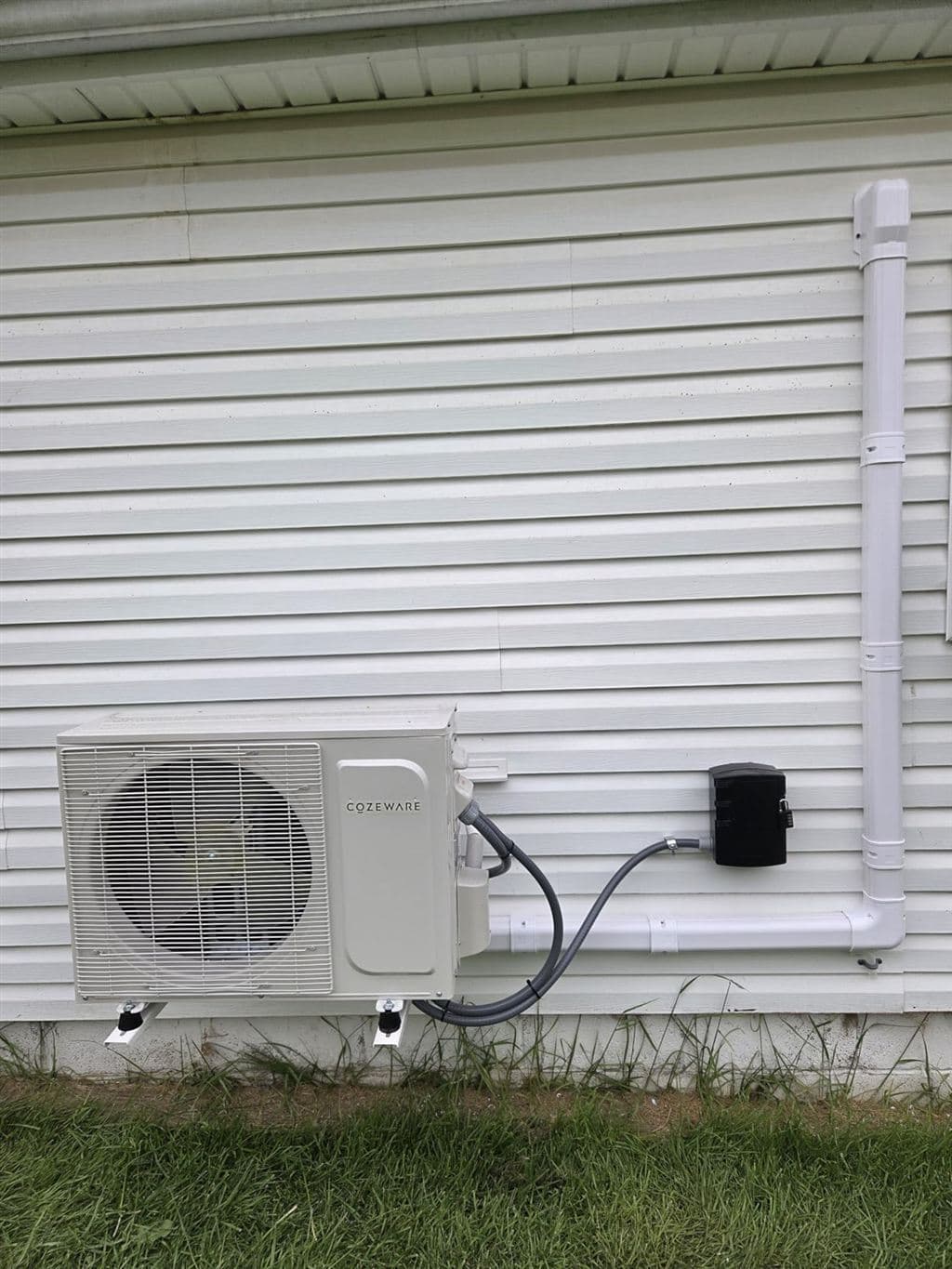
Are mini split air conditioners worth it? For many homes, the answer is yes when adding efficient heating and cooling to a room without usable ductwork, replacing electric resistance heat, or creating independent temperature zones. They are less compelling when existing ducts are efficient, installation is unusually difficult, or several indoor heads would cost more than a well-designed central system.
A ductless mini split combines an outdoor compressor with one or more indoor air handlers connected by refrigerant lines, wiring, and a condensate drain. This guide compares mini split cost, energy efficiency, heating performance, noise, comfort, installation, maintenance, lifespan, and common disadvantages so you can decide whether the investment fits your home.
Mini split value at a glance
| Situation | Is a mini split usually worth considering? | Reason |
|---|---|---|
| Garage conversion, addition, attic, or bonus room | Often yes | Adds targeted heating and cooling without extending an entire duct system |
| Older home without ducts | Often yes | Avoids major wall, ceiling, and floor work required for new ductwork |
| Home heated by electric baseboards | Often yes | A heat-pump mini split can deliver more heat per unit of electricity in suitable conditions |
| One room is always too hot or cold | Often yes | Independent control addresses a local load without conditioning the whole house |
| Efficient central HVAC and good ducts already exist | Maybe not | Savings may be too small to recover equipment and installation costs |
| Many small closed rooms need separate heads | Depends | Multi-zone equipment and installation can become expensive and complex |
| Very cold climate with no backup plan | Model dependent | Low-temperature capacity, defrost behavior, and supplemental heat must be verified |
What makes a mini split different?
A central air conditioner or furnace sends conditioned air through ducts. A mini split transfers heat through refrigerant lines and delivers it directly from an indoor unit. Because there are no long supply and return ducts between the outdoor unit and the room, the system avoids duct leakage and can control individual zones independently.
Most current mini splits use inverter-driven compressors that vary speed instead of repeatedly switching fully on and off. At the correct size, this modulation can maintain steadier temperatures, reduce sound, improve humidity control during cooling, and use less energy at part load. Performance still depends on equipment selection, installation quality, climate, and operating habits.
1. Mini splits can be highly energy efficient
Efficiency is one of the strongest arguments for a ductless mini split. Cooling efficiency is commonly represented by SEER2, while heating efficiency may include HSPF2 and performance tables at specific outdoor temperatures. Higher ratings can reduce electricity use, but the annual savings depend on climate, utility rates, thermostat settings, building insulation, and the system being sized correctly.
Zoning can also save energy when occupants condition only the rooms they use. However, turning one indoor head off does not make the rest of the home thermally separate; heat still moves through walls and open doors. Multi-zone systems may operate less efficiently at very low loads than a well-matched single-zone unit, so compare certified combinations rather than assuming more zones always mean greater savings.
2. Installation cost is the largest drawback
Mini split installation cost includes more than the indoor and outdoor equipment. A complete project may require mounting hardware, a line set, condensate drainage, line-hide covers, an outdoor pad or wall bracket, electrical disconnects, a dedicated circuit, permits, refrigerant work, testing, and commissioning. Difficult access, long line runs, condensate pumps, and service upgrades increase cost.
A single-zone project is generally simpler than a multi-zone installation with several heads. Yet comparing only the number of indoor units can be misleading. Each room requires a load calculation, suitable placement, drain routing, and access for cleaning. Ask for itemized quotes that define equipment model numbers, labor, electrical work, permits, warranty registration, and post-installation support.
- Confirm whether electrical work and a dedicated circuit are included.
- Ask who obtains required permits and inspections.
- Verify line-set length, line-hide finish, drain routing, and outdoor-unit mounting.
- Check whether the quote includes pressure testing, evacuation, commissioning, and documented readings.
- Review labor, parts, compressor, and registration-dependent warranty terms.
- Compare available utility rebates and tax incentives without assuming eligibility.
3. Correct sizing determines comfort and value
Mini split size is expressed in BTU per hour, but room area alone is not enough for accurate selection. Climate, insulation, air leakage, ceiling height, windows, orientation, shade, occupancy, equipment, and room connections all affect the load. A qualified contractor should perform an appropriate heating and cooling load calculation rather than relying only on a broad square-foot chart.
Oversizing can cause short cycling, uneven temperatures, weak humidity removal, and unnecessary expense, although inverter systems can reduce some of these effects by modulating down. Undersizing may leave the room uncomfortable during extreme weather and force continuous high-speed operation. Check both maximum output and minimum modulation for the exact indoor and outdoor unit combination.
4. Heating performance depends on outdoor temperature
A heat-pump mini split can provide cooling in summer and heating in winter by moving heat rather than creating it with electric resistance. This can make it attractive for homes with baseboard heaters, propane, oil, or rooms not served by the main heating system. Not every mini split is optimized for cold climates.
As outdoor temperature falls, available heating capacity and efficiency change. Review manufacturer performance data at the design temperature for your location, not only the nominal rating measured under mild conditions. Cold-climate models may maintain more output at low temperatures and include base-pan or drain protection, but defrost cycles and correct drainage still matter.
| Specification | What it tells you | Why it matters |
|---|---|---|
| Rated cooling capacity | Cooling output under specified conditions | Must match the calculated room or zone load |
| Heating capacity at low temperature | Available output at a stated outdoor temperature | Shows whether the unit can cover winter demand |
| SEER2 | Seasonal cooling-efficiency comparison | Higher ratings can reduce cooling energy under standardized testing |
| HSPF2 | Seasonal heating-efficiency comparison | Useful for comparing heat-pump heating performance |
| Minimum operating temperature | Lowest temperature at which operation is permitted | Does not by itself show how much heat is available at that point |
| Minimum modulation | Lowest stable output the system can deliver | Lower output can improve comfort during mild weather and small loads |
5. Zoned comfort is a major advantage
A single-zone mini split gives one room independent temperature control. This is useful for a home office, bedroom, workshop, sunroom, rental suite, or addition with a different schedule or heat load from the rest of the home. Occupants can adjust that zone without changing the central thermostat.
A multi-zone mini split connects several indoor units to one outdoor condenser. It reduces the number of outdoor units but introduces shared capacity and operating constraints. When several zones call at once, the outdoor unit divides output among them. When only one small zone operates, the system may not modulate low enough for ideal efficiency and comfort.
6. Mini splits are usually quiet, but not silent
Indoor mini split noise is often lower than a window air conditioner because the compressor sits outdoors. At low fan speeds, a quality wall unit can be suitable for bedrooms and offices. Sound rises at high output, and airflow, louvers, expansion sounds, condensate pumps, and dirty filters can still be noticeable.
The outdoor unit also produces fan, compressor, vibration, and defrost sounds. Placement near bedrooms, property lines, reflective walls, decks, or neighbors requires care. Follow required clearances and local noise rules, and use approved mounting methods that limit vibration without restricting service access or airflow.
7. Installation quality matters as much as equipment quality
Even a highly rated mini split can perform poorly when refrigerant connections leak, the line set is contaminated, the system is not evacuated correctly, drainage has the wrong slope, wiring is undersized, or airflow clearances are ignored. Proper commissioning verifies pressures, temperatures, electrical operation, drainage, controls, and system behavior.
Some products are marketed for DIY installation with pre-charged line sets and special connectors. Suitability depends on the exact product, local code, electrical skills, warranty conditions, tools, and property. Many conventional pre-charged systems still require licensed refrigerant and electrical work. Do not release refrigerant, modify wiring, or improvise a connection outside the instructions and applicable law.
8. Maintenance is straightforward but necessary
Mini split maintenance includes cleaning reusable filters, keeping indoor and outdoor airflow clear, inspecting the drain, and arranging professional service when performance changes. Indoor blower wheels and coils can accumulate dust or biological growth when filters are neglected or moisture does not drain correctly. A quick filter rinse alone may not address deeper contamination.
- Clean or replace filters at the interval required for the home and usage.
- Keep furniture, curtains, vegetation, leaves, snow, and debris away from airflow openings.
- Check for water leaks, drain odors, ice, unusual sound, or declining output.
- Do not use pressure washers or unapproved chemicals on coils and electronics.
- Have refrigerant, electrical, drainage, and deep-cleaning problems handled appropriately.
- Maintain access around every indoor head, line route, disconnect, and outdoor unit.
9. Appearance and placement can be drawbacks
A wall-mounted indoor head remains visible high on the wall. Ceiling cassettes, floor consoles, and concealed ducted heads offer alternatives, but they change cost, construction, airflow, and service requirements. Placement must balance appearance with air distribution, drain slope, line routing, wall structure, and access.
Outside, refrigerant lines, communication cable, and drain tubing usually run through a protective cover. The condenser needs a stable mount, weather clearance, drainage, airflow, and service space. A tidy installation plans these details before drilling rather than treating line-hide and drainage as cosmetic afterthoughts.
10. Humidity control and air quality have limits
During cooling, a correctly sized mini split removes moisture as air passes over the cold coil. Oversizing, aggressive temperature changes, frequent on-off operation, or high ventilation loads can reduce dehumidification. Dry mode may prioritize moisture removal, but it does not replace a dedicated dehumidifier in every damp basement or humid climate.
Most ductless heads recirculate room air through a washable screen and optional filters. They do not normally provide outdoor-air ventilation and should not be assumed to equal a dedicated high-efficiency air purifier. Fresh-air, filtration, humidity, kitchen exhaust, bathroom exhaust, and source-control needs should be planned separately.
11. Compare lifetime cost, not only purchase price
The financial case for a mini split depends on installed cost, energy savings, maintenance, repair availability, equipment life, utility prices, and the system it replaces. Replacing electric resistance heat may offer a stronger savings opportunity than adding a mini split beside an efficient modern heat pump. Avoid simple payback promises that do not use your climate and bills.
Check local contractor support and parts availability for the exact brand. Proprietary circuit boards, fan motors, sensors, remotes, and compressors can be expensive after warranty. Multi-zone systems create a shared failure point: an outdoor-unit problem may affect every connected room. A good quote includes realistic maintenance and repair support, not only headline efficiency.
When is a mini split worth it?
- You need heating and cooling in a room or addition without practical duct access.
- Existing ducts are absent, leaky, poorly routed, or expensive to extend.
- You want independent temperature control for rooms with different schedules.
- You are replacing electric resistance heat with a suitable heat-pump system.
- A correctly sized unit has verified capacity for the local summer and winter design conditions.
- Qualified installation, electrical service, drainage, and long-term support are available.
When might a mini split not be worth it?
- An efficient central system and well-sealed ducts already serve the area comfortably.
- Many small rooms would require numerous expensive indoor heads.
- The building lacks suitable outdoor-unit, line-set, drain, or electrical access.
- The selected model cannot meet cold-climate heating demand and no backup plan exists.
- Indoor-unit appearance or outdoor noise cannot be accommodated.
- Local service, replacement parts, permits, or warranty-qualified installation are unavailable.
Mini split buying checklist
- Obtain a room-by-room heating and cooling load calculation.
- Compare single-zone and multi-zone designs using certified equipment combinations.
- Verify cooling and low-temperature heating capacity for the local climate.
- Check SEER2, HSPF2, minimum modulation, sound, voltage, and electrical requirements.
- Plan indoor heads, condenser, line sets, drains, controls, and service access.
- Get itemized quotes covering labor, electrical work, permits, and commissioning.
- Review rebates, warranties, registration deadlines, service, and parts support.
- Estimate lifetime energy and maintenance cost against realistic alternatives.
Frequently asked questions
So, are mini split air conditioners worth it? They are often a strong investment for targeted comfort, ductless homes, additions, and efficient heat-pump replacement of costly resistance heating. The value depends on correct load calculations, climate-appropriate equipment, professional-quality installation, and realistic lifecycle cost. Compare the complete system and the alternatives for your building rather than deciding from BTU, room-size, or efficiency claims alone.
Compare the top picks
Our full rankings for the products covered in this guide.