How to Choose a Robot Vacuum for Your Home
Use this practical robot vacuum buying guide to compare navigation, suction, pet-hair pickup, mopping, docks, maintenance, and total cost.
Learning how to choose a robot vacuum starts with your home, not the largest suction number on a product page. Floor type, room layout, pets, thresholds, loose cables, cleaning frequency, and the amount of maintenance you are willing to do all matter more than one headline specification.
This robot vacuum buying guide explains the features that have the greatest effect on daily cleaning: navigation, obstacle avoidance, brush design, mopping, dock automation, battery coverage, app controls, and replacement costs. The goal is to help you find the best robot vacuum for your home without paying for features your rooms cannot use.
Robot vacuum buying guide at a glance
| Home or cleaning need | Features to prioritize | Why they matter |
|---|---|---|
| Mostly hard floors | Edge cleaning, controlled water flow, washable mop pads | Fine dust collects along walls, while excessive water can damage sensitive flooring. |
| Carpet and area rugs | Strong carpet pickup, automatic suction boost, mop lifting | The robot needs to remove embedded debris without dragging a wet pad across carpet. |
| Homes with pets | Anti-tangle brush, object avoidance, larger bin or self-emptying dock | Hair fills small bins quickly, and pet toys or accidents create additional obstacles. |
| Cluttered rooms | Camera or structured-light obstacle avoidance plus editable maps | Better object detection reduces interruptions from cords, shoes, and small household items. |
| Large or multi-room homes | LiDAR mapping, room selection, reliable recharge and resume | Efficient routes and saved maps help the robot cover more space without repeating rooms. |
| Low-maintenance priority | Self-emptying, mop washing, pad drying, easy-to-clean trays | Dock automation reduces daily handling but increases size, price, and periodic deep cleaning. |
1. Measure the home and identify problem areas
Before comparing models, walk through the cleaning area. Note hard floors, carpet, rug fringes, transitions, steps, dark furniture, narrow chair legs, and low spaces under beds or sofas. Measure the lowest furniture clearance and the tallest threshold the robot must cross. A capable robot is still the wrong choice if it cannot reach important rooms or return to its dock.
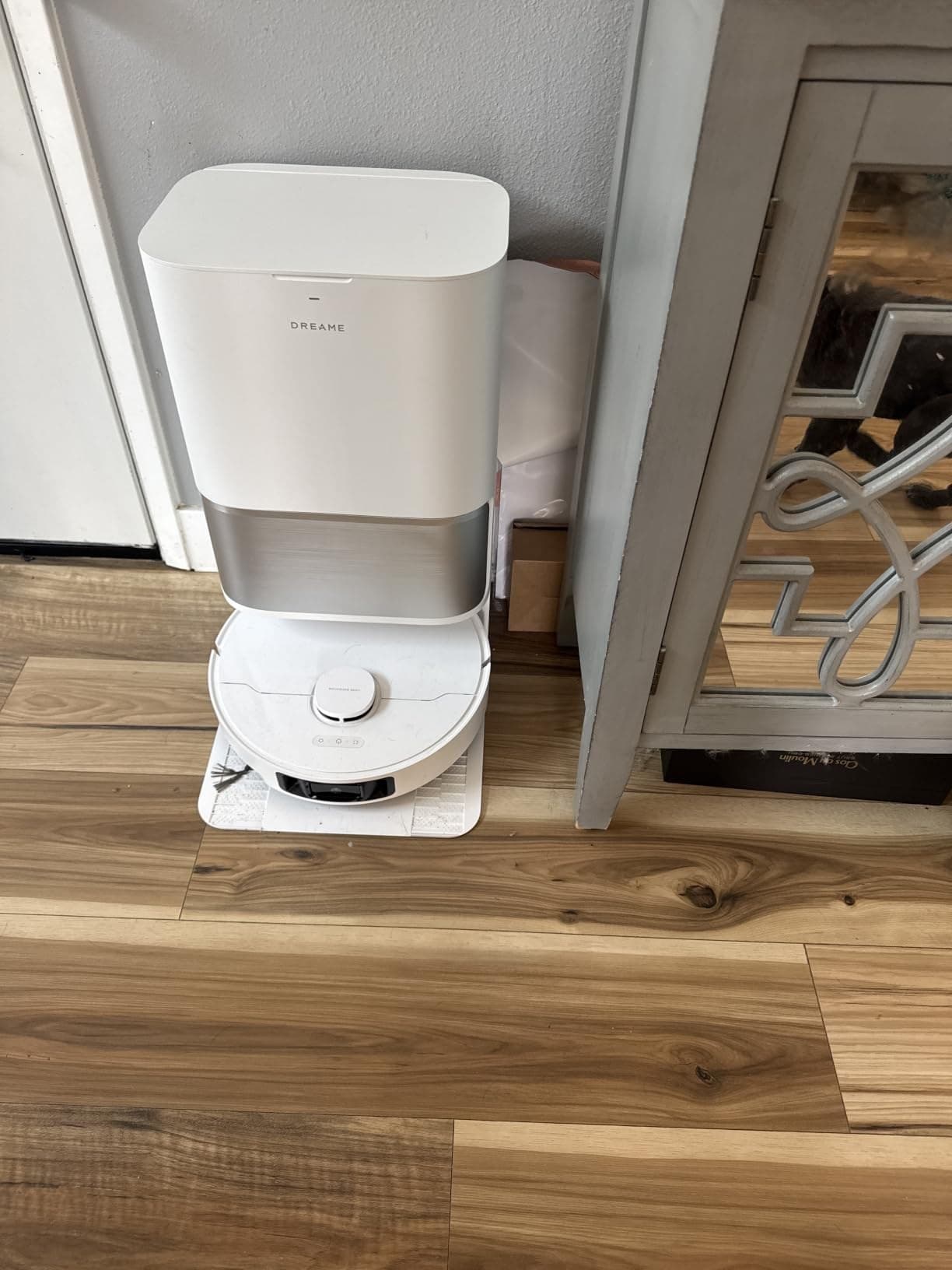
Also decide where the charging or self-emptying dock will sit. It needs power, stable flooring, and enough open space for reliable docking. An all-in-one robot vacuum and mop station may be tall and deep, so confirm dimensions before choosing a model.
2. Choose the right navigation system
Navigation determines whether a robot cleans methodically or wastes battery repeating the same area. Basic robots may rely on bump sensors and less predictable movement. Mapping models use LiDAR, cameras, structured light, or combinations of sensors to understand rooms and plan routes.
A LiDAR robot vacuum is often a strong choice for multi-room homes because laser mapping works in bright and dark conditions and produces accurate room boundaries. Camera-based systems can add visual object recognition, but performance varies with lighting and training data. Some premium models combine LiDAR with front-facing cameras or 3D sensors for both mapping and obstacle avoidance.
- Room mapping lets you clean the kitchen without running a whole-home cycle.
- No-go zones protect cables, pet bowls, delicate rugs, and play areas.
- No-mop zones prevent wet pads from entering carpeted spaces.
- Multi-floor maps help when the robot is carried between levels.
- Recharge and resume allows a robot to finish large areas after charging.
- Map editing is useful when automatic room divisions do not match the home.
3. Do not judge suction by pascals alone
Robot vacuum suction is commonly advertised in pascals, but a higher number does not automatically produce better cleaning. Pickup also depends on airflow, brush contact, floor seals, route speed, and how well the robot directs debris into the intake. Independent performance on hard floors and carpet is more meaningful than comparing peak suction claims from different brands.
For carpet, look for automatic suction boost and a brush roll that agitates fibers without becoming packed with hair. For hard floors, effective edge cleaning and a brush that does not scatter cereal, litter, or crumbs can matter more than maximum power. Adjustable suction is useful when quiet operation or longer battery life is a priority.
4. Match the brush system to pet hair
The best robot vacuum for pet hair should manage both loose fur and long strands wrapped around the roller. Rubber rollers, split rollers, comb structures, and tapered brushes can reduce tangles, but no design is completely maintenance-free. Check how easily the roller, end caps, and side brush can be removed for cleaning.
Pet homes also benefit from a self-emptying robot vacuum because fur can fill an onboard bin before the battery is depleted. Compare dock bag capacity and replacement cost. Bagless docks avoid disposable bags but may release more dust when emptied and often require filter cleaning.
5. Evaluate obstacle avoidance realistically
Obstacle avoidance can reduce rescues, but it should not be treated as permission to leave every object on the floor. Detection quality changes with object size, color, lighting, and camera angle. Thin charging cables, clear plastic, dark socks, rug tassels, and small toys can still be difficult.
Homes with pets should prioritize reliable detection and continue checking the floor before scheduled cleaning. If a robot uses a camera, review privacy settings, image-processing policies, account security, and whether remote camera features can be disabled.
6. Decide whether you need a robot vacuum and mop
A robot vacuum and mop can maintain sealed hard floors between deeper cleanings. Entry-level systems drag a damp pad, while more advanced robots use spinning pads, vibrating plates, pressure, edge extension, or roller-style mops. None should be assumed to replace manual scrubbing for dried spills or heavily soiled floors.
- Electronic water control is safer and more consistent than passive dripping.
- Automatic mop lifting helps protect rugs during mixed-floor cleaning.
- Removable pads are simpler but require manual washing after each session.
- Dock-based mop washing reduces handling but the tray still needs regular cleaning.
- Heated washing may help with oily residue, while heated drying can reduce damp odors.
- Cleaning-solution requirements affect cost and may limit which products can be used.
7. Compare dock automation and ongoing work
The dock can change the ownership experience more than a small difference in suction. A basic dock only charges the robot. A self-emptying dock moves dry debris into a larger bag or bin. An all-in-one dock may also refill clean water, collect dirty water, wash mop pads, dry pads, and dispense cleaning solution.
More automation means a larger station and more components to maintain. Dirty-water tanks can develop odors, wash trays collect residue, and dust bags become a recurring expense. Check whether tanks, trays, ramps, and filters can be removed without tools. The best dock is not the one with the most functions; it is the one whose maintenance schedule matches your routine.
8. Size battery life for actual coverage
Robot vacuum battery life depends on suction level, carpet percentage, mopping, obstacles, battery age, and route efficiency. Large battery capacity is useful, but navigation can matter just as much. A robot that cleans systematically may cover more area than a less efficient model with a larger battery.
For large homes, look for reliable recharge and resume. Confirm whether the robot returns to the dock, charges only as much as needed, and continues from the correct location. If the home has multiple floors, remember that the robot normally cannot move itself between levels or bring its dock upstairs.
9. Review the app without overlooking basic controls
A good app should make common tasks faster: naming rooms, setting schedules, choosing suction and water levels, drawing zones, reviewing cleaning history, and receiving maintenance reminders. Voice control can be convenient but is rarely essential. Physical start, dock, and spot-clean buttons remain useful when the phone is unavailable.
Check whether the robot requires 2.4GHz Wi-Fi, whether core cleaning works during an internet outage, and how long the manufacturer has supported older models. App quality can change through updates, so recent user feedback is more useful than launch-day reviews.
10. Calculate maintenance and total ownership cost
Robot vacuum maintenance includes emptying or replacing dock bags, washing filters, removing hair, cleaning sensors, wiping charging contacts, replacing side brushes, changing mop pads, and occasionally cleaning wheels. Models with washing docks add tanks, trays, and water lines to that list.
- Check the price and availability of bags, filters, rollers, side brushes, and mop pads.
- Confirm whether third-party consumables affect warranty coverage or performance.
- Look for user-replaceable rollers and accessible end caps.
- Review battery replacement and authorized repair options.
- Estimate one to two years of consumable costs rather than comparing purchase price alone.
- Avoid models whose essential replacement parts are already difficult to find.
Which robot vacuum features are worth paying for?
Reliable mapping, a brush system suited to your floors, accessible maintenance, and strong dock reliability usually provide more value than novelty features. Pet homes may reasonably pay more for anti-tangle rollers, object avoidance, and self-emptying. Mixed-floor homes may benefit from dependable mop lifting. Large homes gain more from efficient routes and recharge-and-resume behavior.
Features are less valuable when the home cannot use them. A large all-in-one station is a poor fit without dock space. Advanced mopping adds little in a carpet-dominant home. Multi-floor mapping does not eliminate the need to carry the robot. Use the home checklist to separate essential functions from expensive extras.
Robot vacuum buying checklist
- Measure the cleaning area, thresholds, furniture clearance, and available dock space.
- List all hard floors, carpet types, rugs, pets, and common floor clutter.
- Choose mapping and obstacle avoidance appropriate for the room layout.
- Compare brush design and verified pickup performance, not suction claims alone.
- Decide whether mopping is essential and how mop pads will be cleaned.
- Select the level of dock automation you are prepared to maintain.
- Confirm battery coverage, recharge and resume, and multi-floor limitations.
- Review app requirements, privacy controls, warranty, repair, and parts support.
- Calculate consumable costs before comparing final value.
Frequently asked questions
The best answer to how to choose a robot vacuum is to match the machine to the home and the maintenance routine. Prioritize reliable navigation, suitable brushes, practical obstacle handling, accessible parts, and a dock you can accommodate. A well-matched robot vacuum will not replace every cleaning tool, but it can keep everyday dust, crumbs, and pet hair under control with far less manual floor cleaning.
Compare the top picks
Our full rankings for the products covered in this guide.